Reading this on Krawl? Register for free.
Unlock listen-aloud, reading history and personalised feeds — at zero cost.
Free registration unlocks the full Finance Desk
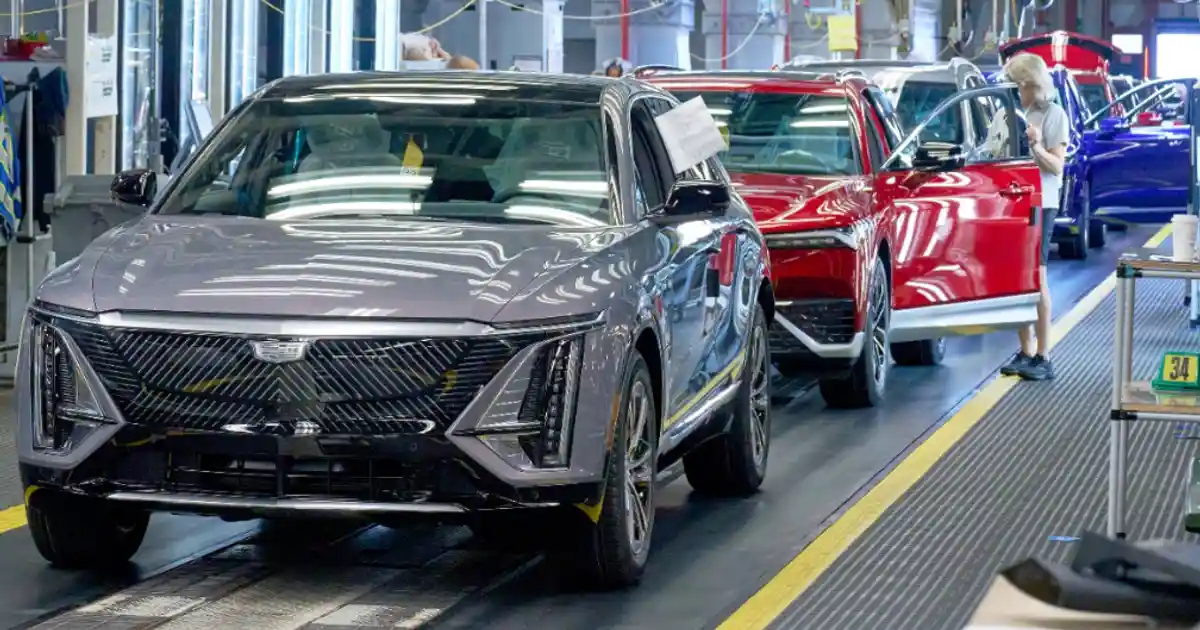
GM's $2.8 Billion Korean Gambit: Navigating Tariffs, Labor Arbitrage, and Global Production Strategy
General Motors' significant $2.8 billion investment in South Korea underscores a strategic pivot towards maximizing global production capacity and leveraging cost efficiencies, even as it navigates complex tariff landscapes and labor cost disparity.
Introduction: GM's Strategic Resurgence in South Korea
General Motors (GM) is embarking on a pivotal strategic investment in South Korea, committing approximately $2.8 billion over the next five years. This substantial capital allocation signals GM's intent to revitalize its Korean operations, bolster export capabilities, and position the region as a critical manufacturing hub for its global portfolio. For finance professionals and investors, understanding this move requires an analytical lens, examining the interplay of capital expenditure, production economics, labor dynamics, and the geopolitical backdrop of global trade. This initiative is more than just an investment; it represents GM's calculated response to evolving market demands, competitive pressures, and the imperative for supply chain resilience in an increasingly fragmented global economy.
The $2.8 Billion Commitment: Fueling Future Growth
The core of GM's strategy in South Korea is a multi-faceted investment totaling approximately $2.8 billion. A significant portion, around $2 billion, is earmarked for converting two existing plants to produce new electric vehicle (EV) models by 2025. This move aligns with GM's broader global electrification strategy, signaling a deeper commitment to the EV transition beyond its domestic market. Additionally, about $1 billion in upfront investments is planned for enhancing the supply chain and production efficiency. This capital injection is crucial for modernizing facilities, adopting advanced manufacturing technologies, and ensuring the seamless integration of Korean-produced components into GM's global assembly lines. The goal is to maximize capacity utilization, which currently stands at roughly half across its three South Korean plants, ultimately targeting full capacity of 600,000 vehicles annually by 2025.
Production Hub and Capacity Utilization
South Korea currently plays a vital role as an export-oriented production base for GM, capable of producing approximately 600,000 vehicles annually. Models like the Chevrolet Trax and Trailblazer, which are manufactured in South Korea, represent a significant portion—about two-thirds—of GM's total South Korean vehicle production. While GM Korea produced approximately 460,000 units in the last year, the company aims to reach full operational capacity. This push for higher utilization is a key financial lever, as fixed costs are spread over a larger output, leading to improved economies of scale and potentially higher profit margins per unit. The planned introduction of two new EV models by 2025 is central to achieving these enhanced production volumes and diversifying the product mix.
Economic Drivers and Cost Arbitrage
GM's sustained investment in South Korea is underpinned by several compelling economic advantages, primarily related to labor cost arbitrage and government incentives.
Labor Cost Differentials
A significant factor is the differential in labor costs. While an average United Auto Workers (UAW) member in the U.S. might earn between $30 to $40 per hour, including wages and benefits, a South Korean auto worker earns a lower hourly rate, typically ranging from $20 to $30. This substantial labor cost advantage translates into considerable savings for GM on a per-vehicle basis, enhancing the competitiveness of Korean-made vehicles in global markets. However, this advantage is not without its complexities, as it can become a point of contention amidst rising calls for domestic job creation in key markets like the U.S.
Government Incentives and Robust Supply Chains
The South Korean government has historically offered various incentives, including tax breaks and subsidies, to attract and retain foreign direct investment in its manufacturing sector. This supportive policy environment further sweetens the deal for GM. Moreover, South Korea boasts a mature and robust auto parts supply chain, providing high-quality components at competitive prices. This well-established ecosystem reduces logistical complexities and costs, contributing to a more efficient production cycle compared to establishing entirely new supply chains in nascent manufacturing regions.
Tariff Headwinds and Global Trade Dynamics
Despite the economic advantages, GM's South Korean operations are not immune to the vagaries of global trade policy, particularly the impact of tariffs.
The Impact of Tariffs on Profitability
The article highlights that tariffs could add between $1,500 to $3,000 to the cost of each smaller Korean-made vehicle sold in the U.S. While specific tariffs fluctuate with trade policies, such additional costs directly erode profit margins or necessitate higher retail prices, potentially impacting sales volumes. GM estimates that global tariffs could cost the company an aggregate of $3 billion to $4 billion annually. These tariffs make the strategic positioning of manufacturing difficult, forcing companies to weigh the benefits of lower production costs against the penalties of cross-border trade.
Geopolitical Pressures and “Made in America” Demand
The increasing pressure for “Made in America” products, fueled by political rhetoric and consumer sentiment, poses a significant challenge. Lawmakers and unions in the U.S. often advocate for greater domestic production, arguing it creates jobs and strengthens national economic security. While GM has also invested approximately $60 billion in U.S. manufacturing, talent, and R&D over the past five years, the global nature of its supply chain means a constant balancing act between cost efficiency and appeasing protectionist sentiments. This geopolitical dynamic adds a layer of risk to long-term investment planning for multinational corporations like GM.
Financial Implications and Outlook
From a financial perspective, GM Korea's performance provides critical insights into the challenges and opportunities.
Revenue and Profit Trends
The article notes that GM Korea's operating profit in 2025 experienced a significant decline, falling by over 60% from the prior year, to roughly $332.2 million. This sharp drop signals potential operational inefficiencies, increased costs, or pricing pressures that affected profitability. Concurrently, revenue for GM Korea fell by 12% to approximately $8.6 billion. While the $2.8 billion investment aims to reverse these trends by boosting production and shifting to higher-value EV models, investors will closely monitor the return on this capital. The company's ability to swiftly ramp up production, manage costs, and effectively market its new EV offerings will dictate whether this investment translates into sustainable profit growth.
Strategic Balancing Act
GM's strategy in South Korea is a testament to the complex balancing act that global automakers must maintain. On one hand, leveraging regions with competitive labor costs and robust supply chains maximizes operational efficiency and potentially enhances shareholder value. On the other hand, navigating the intricate web of international trade policies, tariffs, and geopolitical pressures necessitates strategic flexibility and robust risk management frameworks. The investment demonstrates a long-term commitment to South Korea as a manufacturing and export hub, crucial for its Asian market presence and global distribution.
Conclusion: A Global Blueprint for Automotive Finance
GM's $2.8 billion investment in South Korea offers a compelling case study for finance professionals analyzing global manufacturing strategies. It highlights the critical considerations of capital allocation, cost structure optimization through labor arbitrage, supply chain resilience, and the pervasive impact of trade policy. As GM transitions toward an electrified future, its ability to successfully integrate its South Korean operations into this global vision, while effectively managing the external pressures of tariffs and domestic manufacturing demands, will be a key determinant of its financial success and competitive standing in the evolving automotive landscape. This strategic gambit underscores the continuous need for dynamic capital management and a nuanced understanding of global economic forces in the automotive sector.
Found this useful? Share it!
Interested in Finance Education?
Explore our CFA and investing courses — built for serious learners.
More from Krawl Insights

Unpacking Mr. Market's erratic behavior. From geopolitical tensions to surprising AI pivots.

Netflix's Post-Hastings Era: Navigating $12.25B Q1 Revenue and the $81B Strategic Crossroads