Reading this on Krawl? Register for free.
Unlock listen-aloud, reading history and personalised feeds — at zero cost.
Free registration unlocks the full Finance Desk
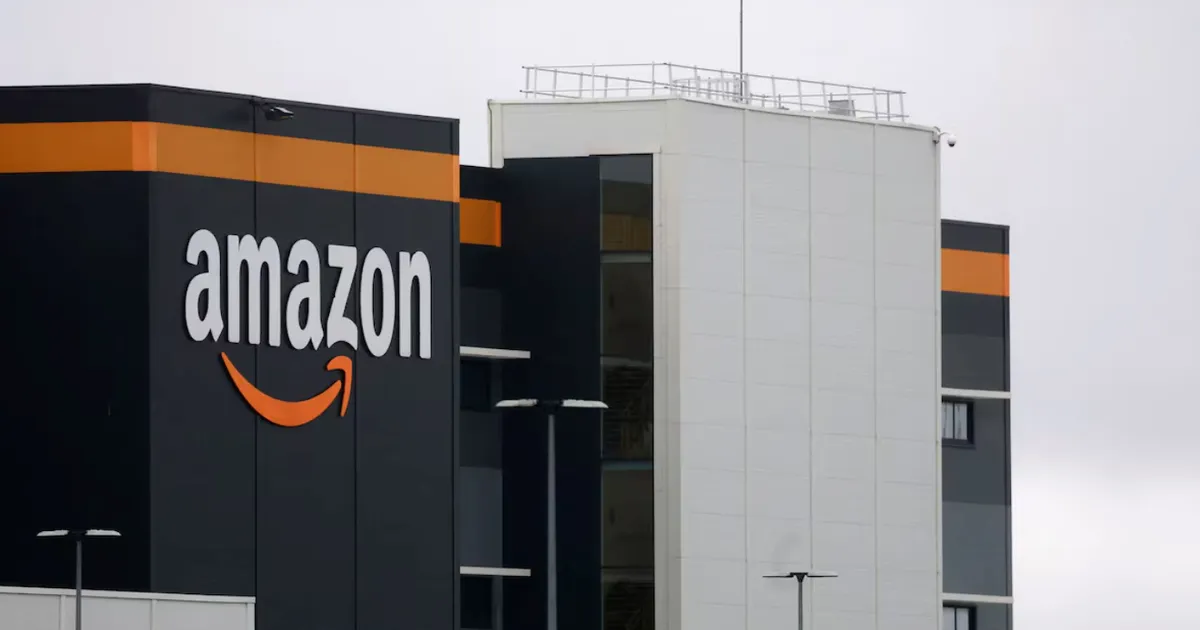
Amazon's $10.8 Billion Globalstar Bid: A Deep Dive into the Satellite Telecom Space Race and Valuation Dynamics
Amazon's reported $10.8 billion pursuit of Globalstar intensifies the satellite internet race, securing vital spectrum for its Leo project. This strategic move, challenging SpaceX's Starlink, aims to boost direct-to-device connectivity and redefine A
Amazon's Strategic Leap into Satellite Telecommunications
The tech giant Amazon is reportedly in advanced discussions to acquire satellite operator Globalstar in a deal estimated at approximately $10.8 billion. This potential acquisition signals Amazon's aggressive push into the rapidly evolving satellite internet sector, primarily aimed at bolstering its Project Kuiper (Leo satellite venture) and challenging the formidable dominance of Elon Musk's SpaceX Starlink. For finance professionals, this transaction represents a significant M&A event with profound implications for valuation methodologies, competitive landscapes, and future revenue streams in the telecommunications and technology sectors.

The Rationale Behind the Acquisition: Spectrum, Synergy, and Scale
Amazon's interest in Globalstar is multifaceted, driven by several strategic imperatives:
- Spectrum Access: A primary driver is Globalstar's extensive spectrum rights. In the highly regulated telecommunications industry, access to licensed spectrum is a critical and finite asset. Globalstar's portfolio provides Amazon with immediate access to valuable frequencies essential for its satellite internet services, particularly for direct-to-device (D2D) connectivity.
- Accelerating Project Kuiper: Amazon's Project Kuiper aims to deploy a constellation of over 3,200 satellites to provide global broadband internet. While Amazon has its own satellite launch plans, acquiring an established operator like Globalstar, which has secured permission to deploy more than 7,000 broadband satellites, could significantly accelerate its deployment timeline and operational capabilities. Globalstar currently operates a network with satellite links that support features for iPhones and other devices.
- Direct-to-Device (D2D) Connectivity: The deal is explicitly framed around providing consumer smartphones with satellite internet connections. Globalstar already offers Apple satellite services for text messages, emergency calls, and roadside assistance in areas without cellular coverage. This existing capability aligns perfectly with Amazon's ambition to offer seamless D2D services, potentially integrating with its own hardware ecosystem (e.g., Fire devices) and cloud services (AWS).
- Competitive Edge Against Starlink: SpaceX's Starlink has already deployed around 10,000 operational satellites and committed over $20 billion in cash, stock, and debt for its satellite-to-cell phone ambitions. Amazon's acquisition of Globalstar would directly intensify this competition, allowing it to compete more effectively for a share of the burgeoning satellite internet market.
Globalstar's Financial Trajectory and Valuation Insights
Understanding Globalstar's financial performance is crucial for evaluating the reported $10.8 billion acquisition price. While the company has shown consistent revenue growth, it has also historically posted net losses, typical for capital-intensive infrastructure plays in their early growth phases. The provided charts offer key insights into Globalstar's recent and projected financial health:
Revenue Growth and Profitability Path
Globalstar's annual results illustrate a company on a clear growth trajectory, albeit with a path to sustained profitability still in progress. Revenue figures, starting below $100 million in 2020, show a steady increase, projected to exceed $200 million by 2025. This consistent revenue expansion demonstrates market traction and demand for its services.
However, the company has also incurred significant net losses, notably peaking around $200 million in 2022. The good news for potential acquirers like Amazon is the projected narrowing of these losses by 2025, indicating improving operational efficiency and scalability. This trend suggests that while Globalstar might not be a highly profitable entity today, its underlying business model is maturing, and it is moving towards positive net income.
Share Price Performance and Market Sentiment
The share-price performance chart, spanning January to April 2026, shows significant volatility for Globalstar, with a notable upward trend and considerable outperformance against the S&P 500 index during this period. Such spikes often reflect market excitement driven by news of strategic partnerships (e.g., with Apple) or potential M&A activities, which would likely predate or coincide with the reported Amazon deal discussions.
From a valuation perspective, an acquisition price of $10.8 billion for a company with projected revenues just over $200 million by 2025 suggests a substantial premium. This premium is likely attributed to:
- The intrinsic value of its spectrum licenses, which are difficult and costly to obtain.
- The strategic synergies with Amazon's Project Kuiper and broader ecosystem.
- The established D2D capabilities and existing partnerships (like with Apple), which de-risk Amazon's entry into this segment.
- The future growth potential in the satellite telecommunications market, which is expected to expand exponentially.
The Broader Satellite Communications Landscape
The potential acquisition of Globalstar by Amazon underscores a critical phase in the satellite communications industry, often dubbed the 'new space race.'
- Intensifying Competition: Beyond SpaceX and Amazon, companies like MDA Space (developer of new satellites for Globalstar) and OneWeb (backed by Eutelsat and the UK government) are also significant players. The competition extends beyond simply launching satellites to securing ground infrastructure, regulatory approvals, and lucrative service contracts with mobile carriers.
- Direct-to-Device Market Potential: Connecting cellphones directly through satellites is a nascent but incredibly promising market. This capability is particularly impactful for remote areas lacking traditional cellular coverage and offers critical services like emergency communications everywhere.
- Regulatory Complexities: The deployment of thousands of satellites and the utilization of global spectrum require navigating complex international and national regulatory frameworks. The deal will likely face scrutiny from regulators, particularly concerning spectrum allocation and market concentration.
Financial Implications for Amazon and Investors
For Amazon, a $10.8 billion acquisition represents a significant investment, comparable to its other major strategic initiatives. Investors will be scrutinizing the deal's potential impact on Amazon's balance sheet, cash flows, and long-term profitability. While the immediate financial impact might involve increased debt or reduced free cash flow, the strategic value lies in future revenue diversification and strengthening its position in a critical technological frontier.
The deal signifies a move by Amazon to own more of the fundamental infrastructure layers underpinning future digital services. Just as AWS dominates cloud computing, Amazon aims to carve out a substantial share of the satellite internet and D2D connectivity markets. This long-term vision, characteristic of Amazon's strategy, demands significant capital expenditure but promises substantial returns if successful.
Conclusion
Amazon's rumored $10.8 billion bid for Globalstar is more than just a corporate acquisition; it is a strategic declaration in the burgeoning satellite internet industry. By acquiring critical spectrum, accelerating its Project Kuiper, and leveraging Globalstar's existing D2D capabilities and partnerships, Amazon aims to become a dominant force in global connectivity. For finance professionals, this transaction offers a compelling case study in valuing strategic assets (like spectrum), assessing competitive dynamics in a capital-intensive sector, and analyzing the long-term financial implications of large-scale technological bets.
Found this useful? Share it!
Interested in Finance Education?
Explore our CFA and investing courses — built for serious learners.
More from Krawl Insights

Unpacking Mr. Market's erratic behavior. From geopolitical tensions to surprising AI pivots.

GM's $2.8 Billion Korean Gambit: Navigating Tariffs, Labor Arbitrage, and Global Production Strategy