Reading this on Krawl? Register for free.
Unlock listen-aloud, reading history and personalised feeds — at zero cost.
Free registration unlocks the full Finance Desk
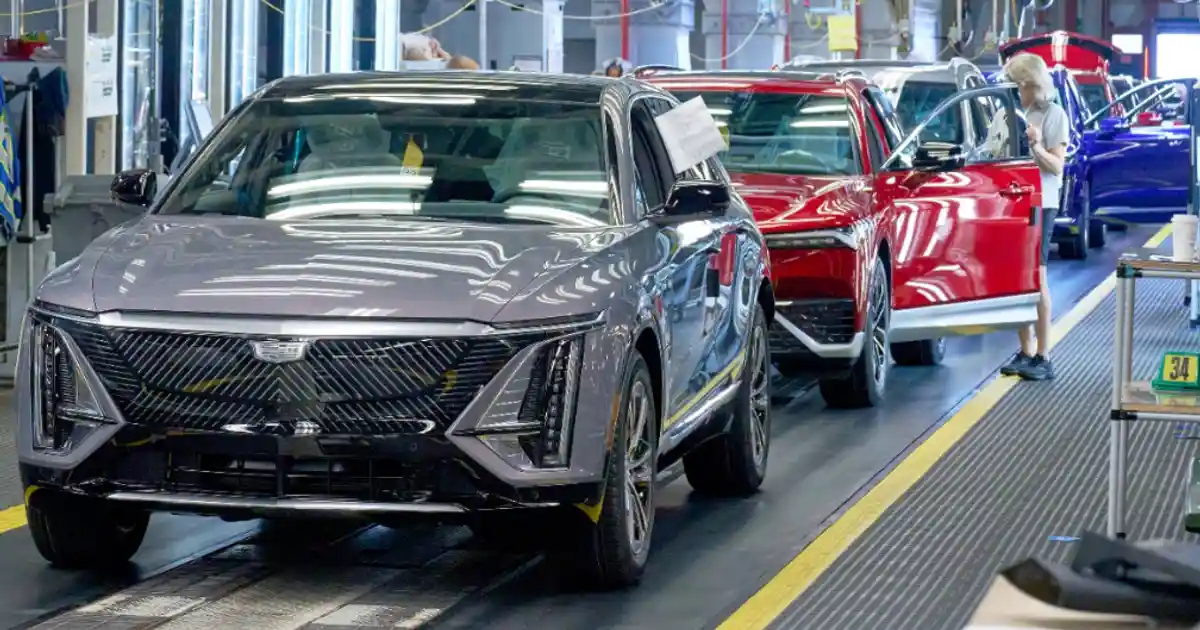
Auto Giants' Executive Pay Puzzle: Navigating $19.5B in Write-Offs and Multi-Million Dollar Bonuses Amidst EV Shifts
Amidst significant EV investments and multi-billion-dollar write-offs, Ford and General Motors are recalibrating executive compensation strategies, with Ford CEO Jim Farley's pay reaching $27.5M and GM CEO Mary Barra's $29.9M, sparking questions.
The Shifting Sands of Executive Compensation in Auto Industry
The electric vehicle "reset" at Ford and GM has ushered in an era of multi-billion-dollar costs, alongside higher compensation for their chief executives. This juxtaposition highlights a critical area of analysis for CFA candidates and finance professionals: how do boards justify significant executive pay increases when the underlying business units are incurring substantial losses and undergoing strategic recalibration?
Ford's Strategic Realignment and Compensation Recalibration
Ford Motor Company's journey into the EV future has been particularly costly. Last year, the company announced a staggering $19.5B in write-offs related to its EV strategy. This figure alone serves as a stark reminder of the financial stakes involved in this industrial pivot. In response to these challenges, Ford's board retooled how it calculates bonuses for Chief Executive Officer Jim Farley and other top executives.
Crucially, the change tied 2025 bonus payouts partially to the sales of "electrified" vehicles, encompassing both EVs and gasoline-electric hybrids, rather than solely pure EV sales, as was the case in 2023 and 2024. This strategic shift reflects a pragmatic acknowledgment of market realities and the need to leverage profitable hybrid segments to offset losses from nascent EV operations. Despite reporting its worst loss of $8.2B since the Great Recession, Jim Farley saw an 11% pay increase, bringing his 2025 compensation to $27.5M. This compensation structure, which also ignored the costs of its EV retreat and tariff-related expenses, suggests a deliberate effort by the board to reward leadership for navigating a complex transition, even when direct EV sales targets are challenging.
General Motors' Approach to EV Performance and Incentives
General Motors has similarly grappled with the financial implications of its EV strategy. GM Chief Executive Mary Barra received a pay package of $29.9M last year, a 1.3% year-to-year increase. GM's compensation strategy also involved adjustments; the company disregarded unexpected costs like tariffs when calculating bonuses, recognizing the importance of a broader portfolio of electrified powertrains. According to a recent proxy filing, costs such as tariffs were deemed "outside of its executives' control" and should not "unduly penalize management's multiyear efforts to advance our long-term EV strategy."
Moreover, GM kept EV-related goals, which were not met, in its annual bonus plan but made a tweak: executives wouldn't benefit from reduced losses when the company stopped making as many EVs. This adjustment, accounting for reduced costs, highlights a board's attempt to mitigate adverse impacts on executive bonuses stemming from strategic, albeit costly, operational changes. Despite these measures, GM incurred $7.9B in EV-related costs, further emphasizing the financial burden of this transition.
Deconstructing the "Electrified" Metric: A Deep Dive for Analysts
The strategic shift by Ford to include hybrid vehicles in its executive bonus calculations for "electrified" sales is a critical point of analysis. From a financial perspective, this move signals a pivot away from an exclusive focus on pure EV adoption, recognizing the immediate profitability and market demand for hybrid options. While the long-term vision for full electrification remains, the short-to-medium term emphasis on hybrids allows Ford to generate higher-margin gasoline truck and SUV sales, which can help subsidize the money-losing EV division. This pragmatic approach is essential for cash flow management and investor confidence, particularly in a capital-intensive industry. For financial analysts, understanding these nuanced performance metrics is key to accurately assessing a company's strategic trajectory and its capacity to fund future growth.
The Role of Non-GAAP Adjustments and Stakeholder Scrutiny
Both Ford and GM's decisions to disregard certain costs, such as tariffs and the costs associated with EV retreats, when calculating executive bonuses, fall under the broader category of non-GAAP adjustments. While companies often argue these adjustments provide a clearer picture of operational performance, excluding significant expenses can raise questions about financial reporting transparency and corporate governance. Finance professionals must critically evaluate such adjustments, as they can materially impact the perception of executive performance and ultimately, shareholder value. When executives are shielded from the full financial consequences of strategic pivots or external market factors, it can dilute accountability and create a disconnect between reported earnings and executive remuneration. This practice warrants close attention from institutional investors and governance bodies.
The Broader Landscape: EV Losses and Market Dynamics
The financial statements reveal the steep cost of the EV transition. Ford incurred approximately $15B in EV-related write-downs last year and anticipates $4.8B in losses from its EV segment in 2025. This latter figure comes even after strategically canceling the F-150 Lightning electric pickup truck, underscoring the ongoing challenges in achieving profitability in the EV space. GM, while not disclosing specific EV losses, reported $7.9B in EV-related costs, indicating similar financial pressures.
These figures highlight the intense competitive landscape and the significant capital deployment required to scale EV production. While Tesla remains the market leader, GM was America's No. 2 EV seller in 2025 (after Tesla), demonstrating some traction in the market. However, the persistent losses raise concerns about the sustainability of current EV investment levels and the timeline for achieving profitability. For investment managers, these data points are crucial for evaluating the long-term viability of auto manufacturers' EV strategies and their impact on future earnings and valuation multiples.
Conclusion
The executive compensation strategies at Ford and General Motors represent a fascinating case study for finance professionals examining corporate governance, performance management, and strategic adaptation in a rapidly evolving industry. The alignment of multi-million-dollar executive pay packages with multi-billion-dollar write-offs and strategic shifts in bonus metrics underscores the complexity of motivating leadership during periods of immense change. As the automotive sector continues its expensive pivot to electric, understanding how compensation structures incentivize specific behaviors and account for financial realities will be paramount for analysts, investors, and all stakeholders committed to ensuring long-term value creation. The ongoing scrutiny of these decisions will undoubtedly shape future governance best practices in a world increasingly driven by innovation and disruption.
Found this useful? Share it!
Interested in Finance Education?
Explore our CFA and investing courses — built for serious learners.