Reading this on Krawl? Register for free.
Unlock listen-aloud, reading history and personalised feeds — at zero cost.
Free registration unlocks the full Finance Desk
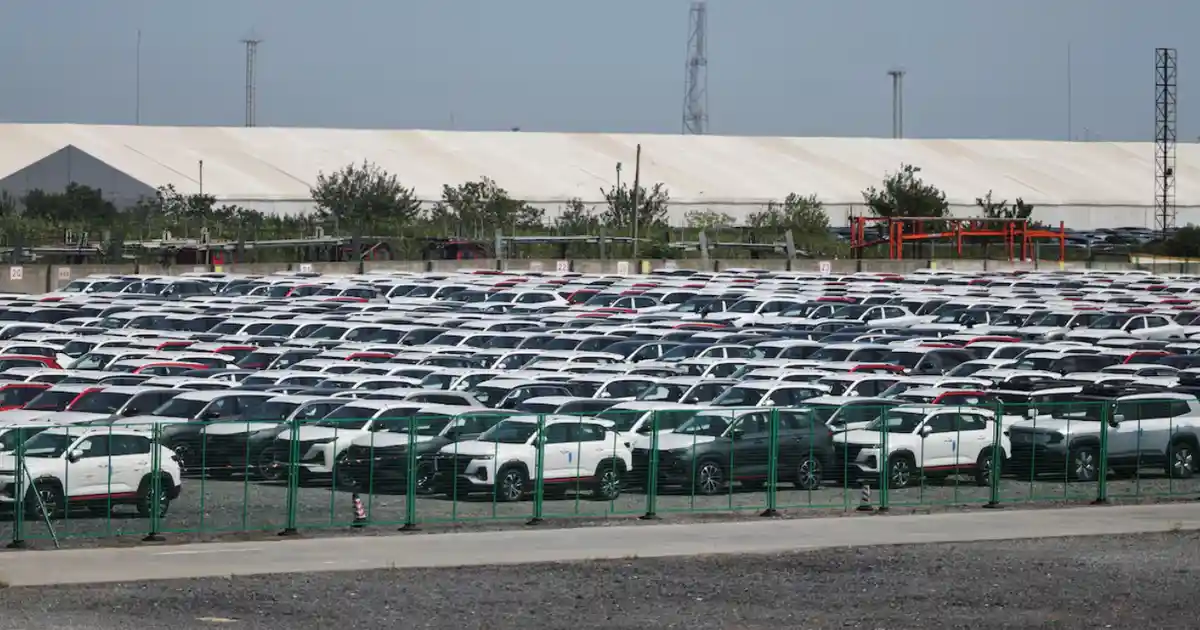
BMW Cuts 2026 Outlook Amidst Middle East Conflict and China Competition
BMW has revised its 2026 outlook downward due to escalating geopolitical tensions in the Middle East and intensified competition within the Chinese market. The German automaker now anticipates a modest decline in auto sales.
Outlook Revision Driven by Geopolitics and Market Dynamics
BMW has lowered its financial projections for 2026, citing the Middle East conflict's impact and heightened competitive pressures in China. The German carmaker now expects a slight decrease in vehicle sales throughout 2026, a shift from its earlier forecast of flat growth. Consequently, the operating margin for its primary auto division is now predicted to range between 1% and 3%, a significant reduction from the previously anticipated 4% to 6%. For context, the segment achieved a 5.3% margin last year.
The revised outlook also projects a substantial decline in pretax earnings from the previous year, whereas earlier guidance suggested a moderate decrease. Free cash flow in the auto segment is still expected to exceed 2.5 billion USD (2.89 billion USD) for 2025, compared to 3.75 billion USD (3.24 billion EUR) booked for 2025. The company's dividend payout ratio of 30% to 40% of group net profit remains unaffected by this outlook revision.
Market Headwinds and Competitive Environment
BMW's share repurchase program remains active. However, the company acknowledges a challenging market in China, contributing to a cloudier outlook and leading to lower total sales estimates for the region. This competitive landscape has intensified, impacting sales not only in China but also across other markets in the Asia Pacific region.
While improved sales trends in Europe and North America offer some offset, they are insufficient to fully mitigate the declines in China. The Middle East conflict has also affected BMW's performance more significantly than initially projected, with elevated energy prices and consumers deferring new car purchases globally due to economic uncertainty.
The company's more cautious stance for the current year contrasts with its earlier confidence in China's recovery, a sentiment expressed last month by BMW executives. They had anticipated a rebound in China, where subdued demand weighed on the group's sales last year. These macroeconomic headwinds have notably depressed BMW's bottom line in the second quarter. The company stated that its financial performance for the remainder of the year will depend on effective efficiency measures designed to mitigate these challenges.
Found this useful? Share it!
Interested in Finance Education?
Explore our CFA and investing courses — built for serious learners.