Reading this on Krawl? Register for free.
Unlock listen-aloud, reading history and personalised feeds — at zero cost.
Free registration unlocks the full Finance Desk
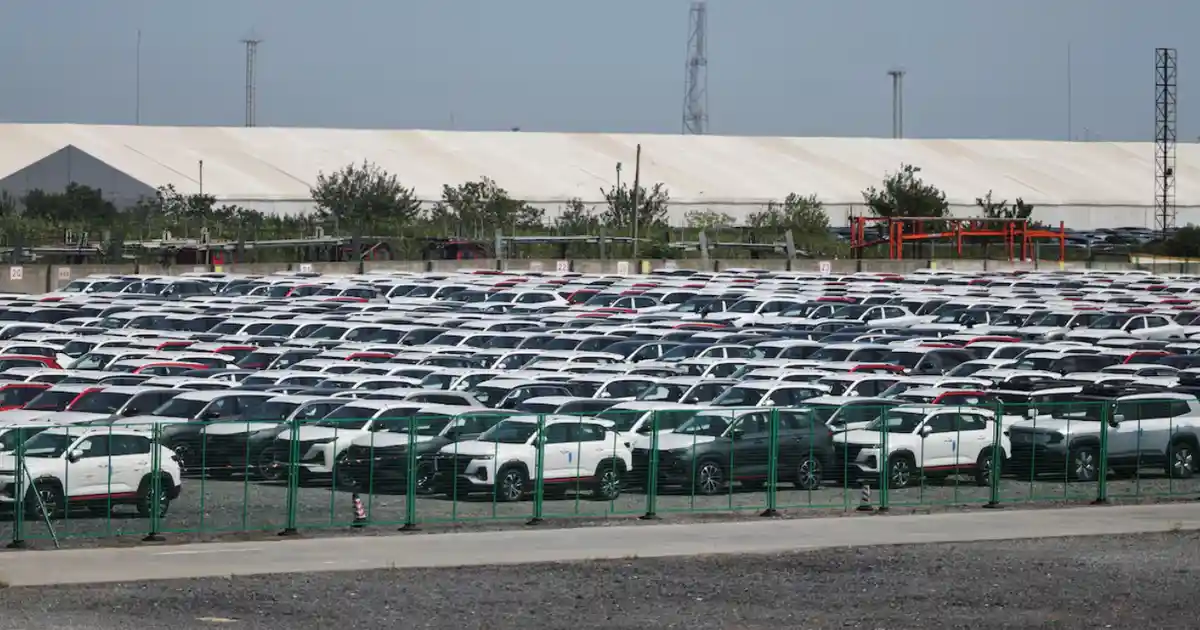
China's Car Sales Hit the Brakes: What's Behind the March 2025 Slowdown?
China's automotive market faces continued headwinds as car sales decline in March 2025. We break down the numbers, the reasons, and what this means for the world's largest auto market.
If you've been tracking global automotive trends, here's something that might raise your eyebrows: China's car sales extended their decline into March 2025. For a country that's been the world's largest automobile market for over a decade, this isn't just a blip on the radar—it's a signal worth paying attention to.
Let's dive into what's happening, why it matters, and what finance professionals should be watching.
The Numbers Don't Lie
China's passenger car sales have been sliding, and March 2025 continued this uncomfortable trend. The China Passenger Car Association (CPCA) reported figures that show the market struggling to regain momentum despite various stimulus efforts and incentives rolled out by the government.
Now, before we get too pessimistic, it's important to contextualize these numbers. The Chinese auto market has been on a rollercoaster ride post-pandemic, with supply chain disruptions, changing consumer preferences, and economic headwinds all playing their part.
Why Are Chinese Consumers Pumping the Brakes?
Several factors are contributing to this slowdown:
1. Economic Uncertainty
China's economy has been facing its share of challenges. Property market troubles, youth unemployment, and cautious consumer sentiment have all created an environment where big-ticket purchases like cars take a back seat. When people are worried about their financial future, they tend to postpone major expenses—and a car definitely qualifies as one.
2. Market Saturation
Here's a reality check: China's car ownership has grown exponentially over the past two decades. Many urban households already own vehicles, which means the market is transitioning from explosive growth to replacement demand. That's a fundamental shift that changes the game entirely.
3. The EV Transition Confusion
China is pushing hard toward electric vehicles (EVs), and while that's great for the environment, it creates a peculiar consumer dilemma. Should you buy a traditional internal combustion engine vehicle now, or wait for EVs to become even better and cheaper? This decision paralysis can freeze purchases altogether.
4. Price Wars and Profit Pressures
The Chinese auto market has become brutally competitive. Domestic players like BYD, Geely, and NIO are battling with international giants like Tesla, Volkswagen, and Toyota. The result? Aggressive price cuts that might sound great for consumers but signal an unhealthy market dynamic that can make consumers wait even longer for better deals.
What Does This Mean for Investors?
If you're analyzing automotive stocks or considering exposure to the Chinese market, this trend deserves serious attention:
- Supply Chain Impact: Weaker Chinese demand affects global auto suppliers. Companies that rely heavily on the Chinese market for revenue need to be reassessed in your portfolio.
- Commodity Prices: Reduced auto production can impact demand for steel, aluminum, copper, and other industrial metals. This ripple effect extends far beyond the automotive sector.
- EV Sector Dynamics: While overall car sales are declining, the EV segment within China is showing more resilience. Companies purely focused on electric vehicles might navigate this downturn better than traditional automakers.
- Currency Considerations: A struggling auto sector adds to broader economic concerns about China, which can influence yuan valuations and foreign exchange strategies.
The Government Response
Beijing isn't sitting idle. The Chinese government has historically viewed the auto industry as strategically important—not just for economic growth but also for employment and technological advancement.
Expect policy interventions, which might include:
- Purchase subsidies or tax breaks for car buyers
- Trade-in incentives to replace older vehicles
- Further support for EV adoption
- Potential easing of license plate restrictions in major cities
The effectiveness of these measures will be crucial to watch in the coming quarters.
Looking Beyond the Headlines
While declining sales figures make for concerning headlines, the story is more nuanced than simple doom and gloom. China's automotive industry is in the middle of a massive transformation—from fossil fuels to electric, from quantity to quality, from growth market to mature market.
This transition period will naturally involve some turbulence. The winners will be companies that can adapt to changing consumer preferences, maintain healthy margins despite competition, and innovate in areas like autonomous driving, connectivity, and sustainable mobility.
The Bigger Picture for India
For those of us in India, China's automotive challenges offer both warnings and opportunities. As India's middle class expands and our auto market grows, we can learn from China's experience. The sustainability of growth, the importance of domestic manufacturing capabilities, and the timing of the EV transition are all lessons sitting right in front of us.
Moreover, if Chinese manufacturers face continued pressure domestically, they might look more aggressively toward export markets—including India. That's something our domestic auto industry needs to prepare for.
Final Thoughts
China's March 2025 car sales decline is more than just a monthly statistic—it's a window into broader economic trends, changing consumer behavior, and the growing pains of an industry in transition.
For finance professionals and CFA candidates, this situation offers a perfect case study in sector analysis, understanding macroeconomic indicators, and recognizing how policy, technology, and consumer sentiment intersect.
Keep your eyes on the upcoming quarterly reports from major automakers with Chinese exposure. The management commentary will be just as important as the numbers themselves.
After all, in finance, context is everything—and right now, the context around China's auto market is telling us a fascinating story about the future of global mobility.
Found this useful? Share it!
Interested in Finance Education?
Explore our CFA and investing courses — built for serious learners.
More from Krawl Insights

Unpacking Mr. Market's erratic behavior. From geopolitical tensions to surprising AI pivots.
GM's $2.8 Billion Korean Gambit: Navigating Tariffs, Labor Arbitrage, and Global Production Strategy