Reading this on Krawl? Register for free.
Unlock listen-aloud, reading history and personalised feeds — at zero cost.
Free registration unlocks the full Finance Desk
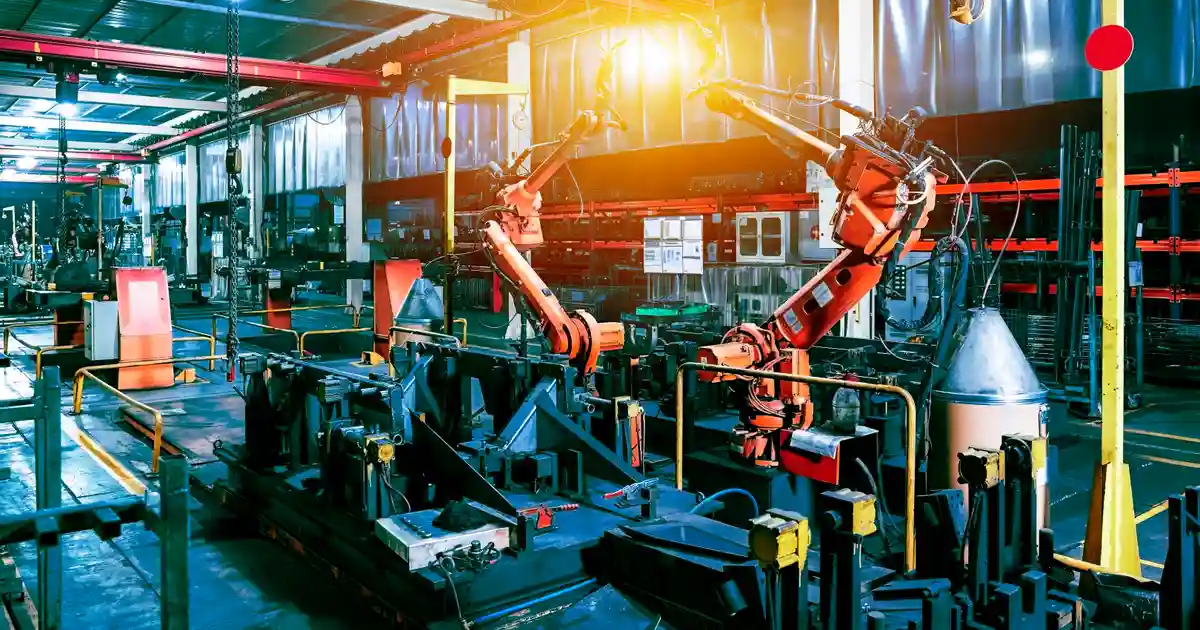
China's Factories Move Abroad: Exporting Production Amid Trade Tensions
Chinese manufacturing is increasingly relocating abroad, transitioning from "Made in China" to "made by China" globally. Driven by Western tariffs and weak domestic demand, companies are establishing factories in North America and Europe.
Shifting Production Away From China
Chinese manufacturing is undergoing a significant transformation, with companies increasingly establishing production facilities outside China. This shift, often described as moving from "Made in China" to "made by China," reflects a global strategy by Chinese businesses.
Key drivers behind this exodus include higher Western tariffs and subdued domestic demand. Consequently, Chinese factories are relocating production for a range of goods, from appliances to automobiles, across North and South America and Eastern Europe.
More Chinese enterprises are considering entry into the U.S. market, following discussions between President Trump and Chinese leader Xi Jinping that aimed to establish a bilateral investment framework.
However, this expansion is not without challenges. Leaders in the U.S. and Europe express concerns that Chinese competition could significantly pressure local businesses, potentially displacing incumbents and suppressing wages. For example, a $2.4 billion USD battery plant project by Chinese firm Gotion in Michigan has faced prolonged opposition, stalling its development for years due to local concerns about Chinese ownership.
Global Expansion of Chinese Manufacturing
BYD, a prominent Chinese automaker, plans to invest $33 million USD in a manufacturing plant in Brazil, building on its existing electric bus production. This move aligns with a broader trend of Chinese firms increasing their foreign investment. In the 1980s and 1990s, U.S. carmakers and suppliers often established new production sites to adapt to market demands. Today, Chinese companies are employing a similar strategy, with investments in the automotive sector alone surging by more than 100,000 jobs between 2020 and 2023, according to one analysis.
Economists suggest that if Chinese manufacturers abroad accounted for just 1,000 factories, domestic output in their home countries could decrease by an average of 7.1% compared to a year earlier.
After decades of China attracting foreign capital, Chinese businesses are now making significant investments abroad. This shift is expected to exert competitive pressure on Western industries and influence global economic dynamics.
Chinese firms are acquiring market share and circumventing trade barriers by directly producing in target markets. For instance, Shandong Linglong Tire plans a new factory in Serbia, while Chery Automobile intends to establish a joint venture in Spain. In 2024, Chery's top exporter, will open its first European plant in Spain, which will involve an initial investment of $468 million USD, with production slated to begin in 2029.
For Spain, the venture is expected to create over 1,600 jobs directly and indirectly. This project, along with other Chinese automotive investments, signifies a strategic push into Europe. Spain's Industry Minister, Jordi Hereu, emphasized the importance of ensuring that European interests are protected in such collaborations.
However, local opposition can impede these projects. For example, a Chinese battery factory in Michigan faced protests from residents concerned about China's growing influence. Similar sentiments have emerged in the U.S. Congress, with calls for greater scrutiny of Chinese investments. The U.S. factory workforce faces a challenge as Chinese businesses bring lower labor costs and less stringent labor practices to new markets, impacting local wage structures and working conditions. One analyst noted that working overtime is common in China, but such practices are often not compliant with U.S. regulations.
The goal for many Chinese companies is to replicate the success of manufacturing in other nations, a strategy that has previously benefited Japanese automakers like Nissan, which established a 40% stake in a joint venture with Renault.
Found this useful? Share it!
Interested in Finance Education?
Explore our CFA and investing courses — built for serious learners.