Reading this on Krawl? Register for free.
Unlock listen-aloud, reading history and personalised feeds — at zero cost.
Free registration unlocks the full Finance Desk
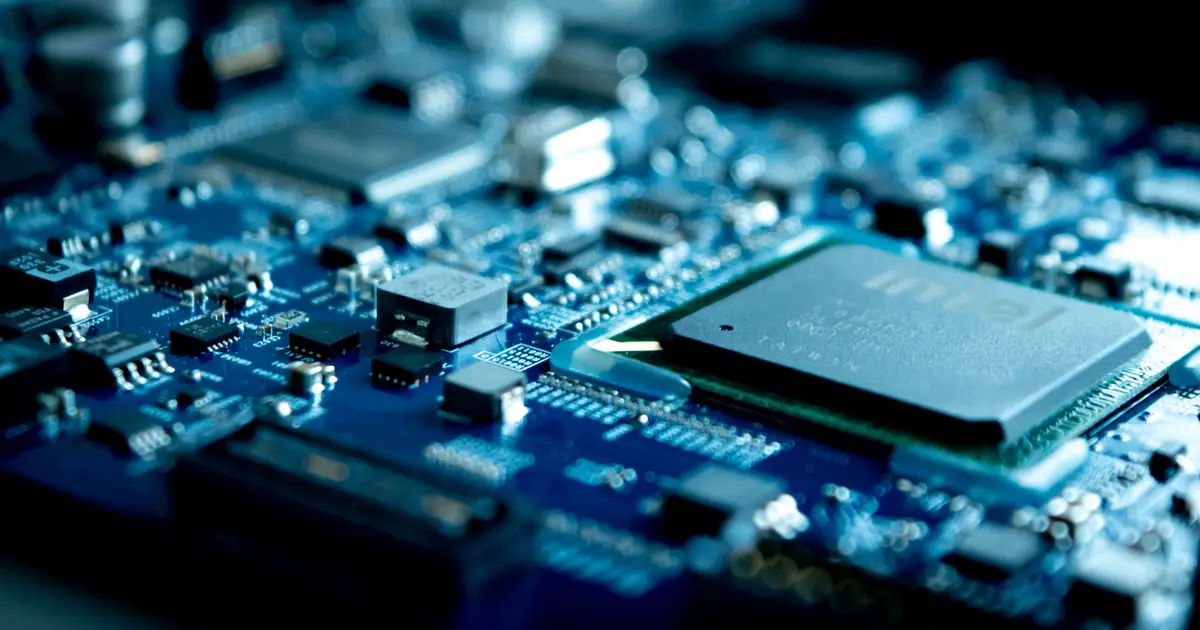
Chip Index Surges as AI Demand Fuels Semiconductor Rally
The Philadelphia semiconductor index recorded a significant rally, driven by increasing optimism for AI chip demand and robust earnings. Major players like Nvidia, Broadcom, and Marvell Technology Group saw substantial gains, pushing the index to its
Semiconductor Index Reaches New Highs
The Philadelphia semiconductor index (SOX) advanced past a new milestone mid-Wednesday, positioning it for its strongest year-to-date performance in two decades. The index has risen 9.3% in one week, with Nvidia, Micron Technology, and Marvell Technology Group among the leading contributors.
Optimism surrounding artificial intelligence (AI) has been a significant catalyst for the gains. Nvidia's market capitalization surpassed USD $1 trillion, while Marvell and Micron Technology also reached new highs. Advanced Micro Devices (AMD) has also seen a substantial increase in its valuation, now higher than JPMorgan Chase.
Investor sentiment towards the AI building-block market has provided crucial support, pushing the index out of its multi-week trading range. This bullish shift has prompted some to question whether the rally can be sustained, particularly after a strong run.
The SOX index overall has surged 75.20% year-to-date, closing at 5,006.44 on Wednesday. The Nasdaq Composite gained 0.1% to 26,674.73, and the Dow Jones Industrial Average fell 0.4% to 50,644.28.
The Philadelphia semiconductor index has climbed 82% so far in 2026, marking its best-ever performance over a full 100 trading days.
Market Breadth and Valuation Concerns
The current rally follows the index's previous peak in 1995 when it rose more than 200%. This year's performance exceeds that of earlier periods. Increased market breadth, with more stocks participating in the rally beyond the largest components, indicates broadening support.
Companies like Intel, which designs and manufactures chips, and Nvidia, a primary supplier of chips for AI data centers, have seen substantial increases. The market capitalization of the top ten semiconductor firms has grown by USD $5.7 trillion in 2024. Despite this growth, some analysts caution against potential overvaluation, comparing it to previous tech bubbles.
Private investment in AI infrastructure reached USD $80 billion in 2023, a multi-year high, and is on track for continued growth. This significant capital influx into AI infrastructure and computing platforms supports the robust demand for chips.
The sustained demand for AI memory chips is creating a global shortage. Nvidia, a key designer of chips, estimates a 3,800% increase in demand for AI-related hardware in the past three months. The company notes that AI models often require new computing capacity rather than just software optimizations.
Industry Dynamics and Future Outlook
The high cost of renting AI computing capacity, particularly from Nvidia, has surged, rising nearly fourfold in the last three months. This high demand is pushing chip manufacturers to increase production and explore new technologies.
The market for AI memory chips is highly concentrated, with Intel, Nvidia, and AMD as major players. Nvidia's GPUs are critical for AI and are currently facing high demand, leading to a scramble among server and data center operators to secure supply.
From February 26 to May 27, 2025, the daily spot market price for Nvidia's GPUs nearly quadrupled. This spike mirrors the broader trend in memory chip demand for AI and high-performance computing, with prices more than doubling between November 2024 and May 2025.
AI models require vast computing power for tasks such as machine learning and data organization. The demand for increasingly powerful chips is expected to persist as AI technologies advance.
H.B. Schwab's Chief Market Strategist, Gina Martin, observed that a pull-back in AI spending by hyperscalers like Google and Amazon occurred recently. She noted that these companies are finding ways to reduce computing power for AI, but this reduction does not necessarily imply a negative policy shift, as the fundamental tailwinds for AI remain strong.
The PHLX Semiconductor Index's price-to-earnings ratio has seen periods of extreme volatility, historically reaching highs comparable to the dot-com era. Currently, valuations are elevated, but some analysts argue that strong earnings growth justifies the higher multiples.
Companies in the index have traded at 26 times their next 12 months' earnings, compared to their 10-year average P/E ratio of 21 times. Micron's earnings per share are projected to increase 47 times over the next 12 months. The index's forward P/E is 2.8 times higher than that of the S&P 500. This indicates that investors are pricing in substantial future growth.
Intel shares jumped 20% in April after the company reported strong quarterly sales from its data center segment. This growth was largely driven by GPU sales for AI, which amounted to USD $5.1 billion, exceeding Wall Street expectations. Nvidia also recorded strong sales from both GPUs and CPUs, alongside record revenues for income and last-week gains, pushing its blistering demand.
The semiconductor index now stands above its 50-day moving average, a level that analysts consider a bullish signal. Total private market deals related to AI infrastructure amounted to USD $80 billion in the last quarter of 2025, a multi-year high, although data suggests a cooling in deal size for later periods.
AI infrastructure continues to attract significant capital, with private equity and venture capital contributing to the deal flow. This sustained investment underscores the confidence in the long-term growth trajectory of the AI sector and, consequently, the demand for semiconductor technology.
Found this useful? Share it!
Interested in Finance Education?
Explore our CFA and investing courses — built for serious learners.