Reading this on Krawl? Register for free.
Unlock listen-aloud, reading history and personalised feeds — at zero cost.
Free registration unlocks the full Finance Desk
Downtown Office Conversions: A Flawed Bet on Post-Pandemic Urban Renewal
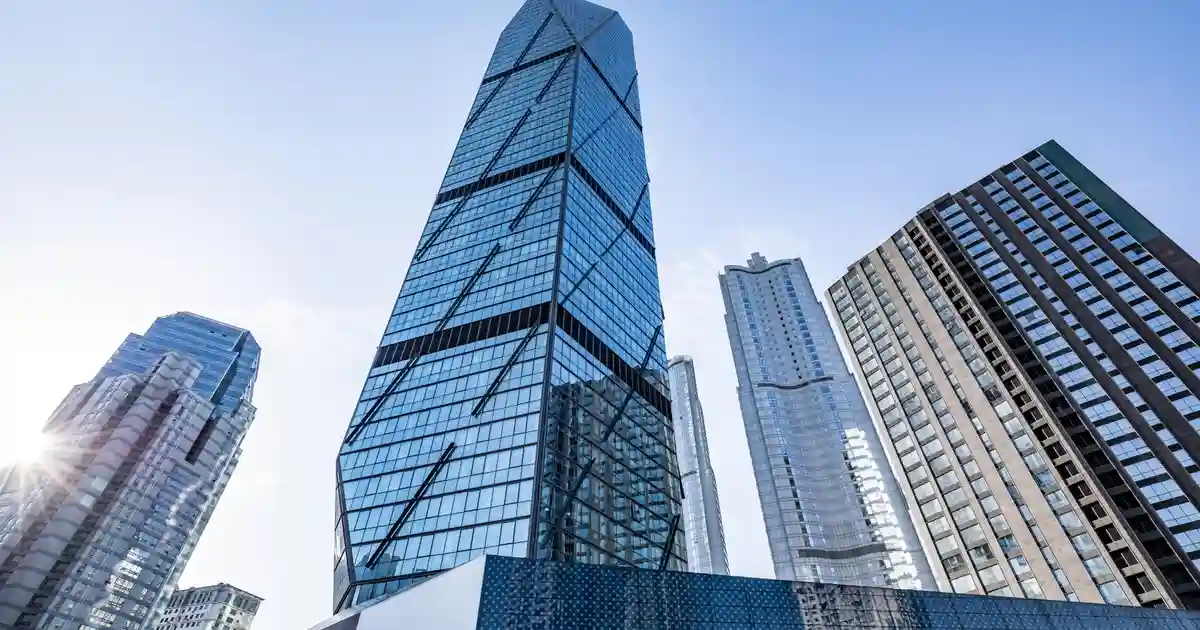
Many cities are pursuing office-to-residential conversions as a solution to housing shortages and declining downtown office demand. However, this strategy faces significant hurdles, including high costs and complex approvals.
Misguided Optimism for Urban Revitalization
Many cities are actively pursuing office-to-residential conversions as a strategy for urban revitalization and to address housing shortages. For example, Denver has committed USD 63 million in public funds to support such projects. Asher Luzzatto, a prominent figure in these conversions, is transforming two downtown Denver office buildings into approximately 100 apartments and considering an additional 100 units across two other properties. He also plans to incorporate ground-floor retail, a bookstore, art gallery, children's museum, and daycare center, envisioning a comprehensive mixed-use community.
Despite these efforts, the economic viability of converting legacy office space into residential units remains questionable. The investment required often exceeds the potential returns, particularly for properties located in less desirable downtown areas. Developers frequently face challenges in securing financing and navigating complex permitting processes. In Denver, a significant portion of recent office-to-residential conversions have been supported by substantial public subsidies. Luzzatto acknowledges the financial hurdles, noting his four initial building acquisitions cost just USD 1 in total, yet required significant investment to become viable.
The Contrarian View on Conversions
The prevailing belief that downtown office conversions are a straightforward solution to contemporary urban challenges may be flawed. The argument that such conversions are essential for downtown survival, particularly in a post-pandemic environment of reduced office occupancy, overlooks several critical factors. Critics contend that many advocates are focusing on the wrong metrics and neglecting the long-term implications for urban planning.
For instance, Lawrence Welk, a key figure in Denver's conversion projects, views his work as part of a broader shift towards downtown residential living. He has transformed former industrial buildings into what he terms 'loft-like' offices within the Welk family's mixed-use developments. However, the broader trend of office vacancy and remote work patterns complicates the picture. Data from CBERE Research shows that downtown office vacancy in the U.S. has risen steadily from 10% in 2019 to over 25% in 2023. Denver's own office vacancy rate stands at nearly 30%.
Operational and Financial Hurdles
The practicalities of converting office buildings into residential units present significant operational and financial challenges. Many older office structures are not designed for residential layouts, requiring extensive and costly renovations to accommodate kitchens, bathrooms, and adequate natural light. The average cost for such conversions can range from USD 1,700 to USD 4,500 per square foot for a three-bedroom unit.
Moreover, the influx of new residential units into downtown cores may not be met with sufficient demand. These areas often lack essential amenities like grocery stores, parks, and schools, making them less attractive to families and long-term residents. The social fabric of former central business districts, once vibrant with daytime activity, struggles to adapt to residential needs. Luzzatto admits that the 'wrong thesis' has driven much of the conversion movement, and that 'every one spent a bunch of money in 2021 and 2022' on projects that ultimately faced severe issues, suggesting a misallocation of capital.
Broader Urban Development Concerns
The drive for office-to-residential conversions is part of a larger trend in urban development that began decades ago. Starting in the mid-20th century, a focus on white-collar employment and the deindustrialization of inner cities led to the decline of traditional downtown residential populations. This shift created areas dominated by commercial activity, poorly suited for residential living. The current wave of conversions attempts to reverse this trend, but often without addressing the fundamental shortcomings of downtown environments as residential spaces.
While some public investment in downtown areas, such as the USD 5.25 million allocated to Denver's Energy Center and the USD 100 million spent on upgrading the Denver Union Station, can improve local infrastructure, these efforts do not guarantee sustained residential demand. The lack of basic amenities and a perceived decline in public safety continue to deter potential residents. Mayor Mike Johnston's efforts to reduce crime in Denver, for instance, are critical but represent only one piece of a complex puzzle. Without a holistic approach to urban planning that integrates residential needs with broader community support, the long-term viability of these downtown conversions remains uncertain.
Found this useful? Share it!
Interested in Finance Education?
Explore our CFA and investing courses — built for serious learners.