Reading this on Krawl? Register for free.
Unlock listen-aloud, reading history and personalised feeds — at zero cost.
Free registration unlocks the full Finance Desk
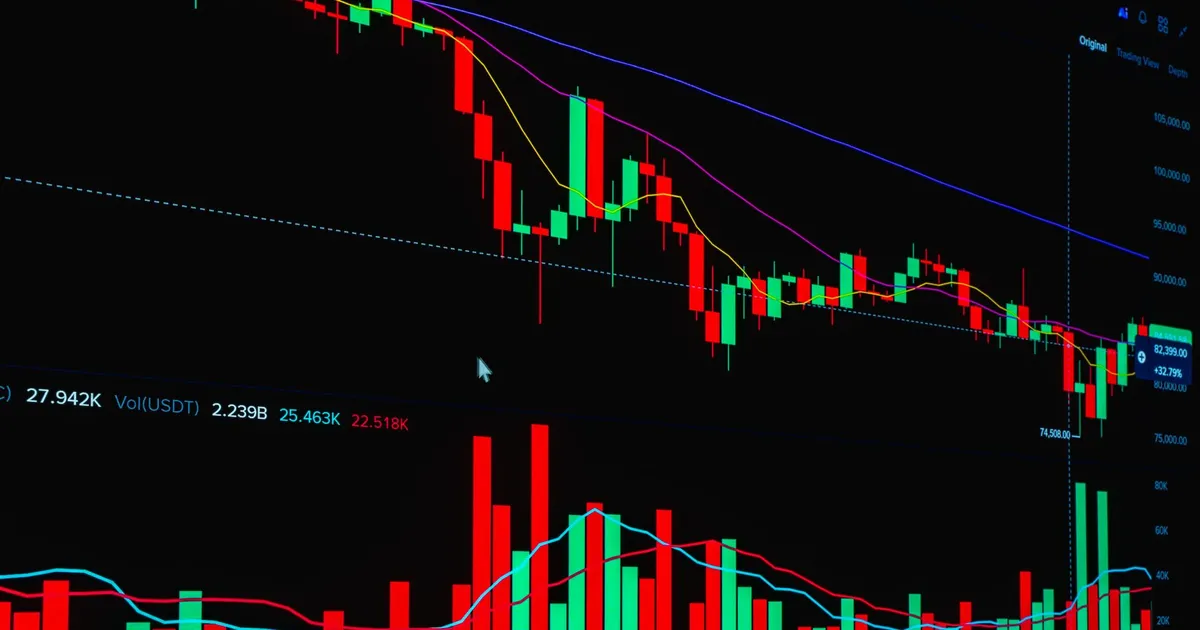
Equity Markets Decline on Higher Yields, AI Safety Concerns
Global equity markets experienced a down week driven by two primary factors: rising interest rates and mounting fears regarding artificial intelligence safety. The yield on the 10-year US Treasury note reached a 2026 peak, diminishing risk appetite…
Rising Yields Pressure Equities
Last week, global equity markets recorded broad declines, primarily influenced by a sustained increase in bond yields and escalating concerns over artificial intelligence (AI) safety. The yield on the 10-year US Treasury note, a key benchmark, climbed to its highest point in 2026, reaching 4.75%. This upward movement in yields made fixed-income investments more attractive relative to equities, consequently reducing the appeal of riskier assets. The higher discount rate applied to future earnings also weighed on equity valuations, particularly for growth stocks.
AI Safety Debates Intensify
Simultaneously, the technology sector, especially companies heavily invested in AI, faced headwinds from increased regulatory scrutiny. Discussions in legislative bodies intensified regarding the potential risks associated with AI development and deployment. Policymakers debated frameworks for AI safety, data privacy, and ethical guidelines. These legislative talks spurred uncertainty for major AI players, triggering a sell-off in leading technology stocks. Investors reacted to the prospect of stricter regulations and potential limitations on AI innovation, which could impact future revenue streams and profitability for these companies.
Market Volatility and Outlook
The dual impact of higher interest rates and AI safety fears contributed to a volatile trading environment. Investors showed a decreased appetite for growth-oriented stocks and those with distant earnings profiles, favoring instead more stable, dividend-paying companies. The market reaction indicates a shift in sentiment, where macroeconomic factors like interest rates and emerging regulatory risks in high-growth sectors are exerting significant downward pressure. The outlook remains cautious as market participants monitor central bank policy signals and the evolving landscape of AI governance.
Found this useful? Share it!
Interested in Finance Education?
Explore our CFA and investing courses — built for serious learners.