Reading this on Krawl? Register for free.
Unlock listen-aloud, reading history and personalised feeds — at zero cost.
Free registration unlocks the full Finance Desk
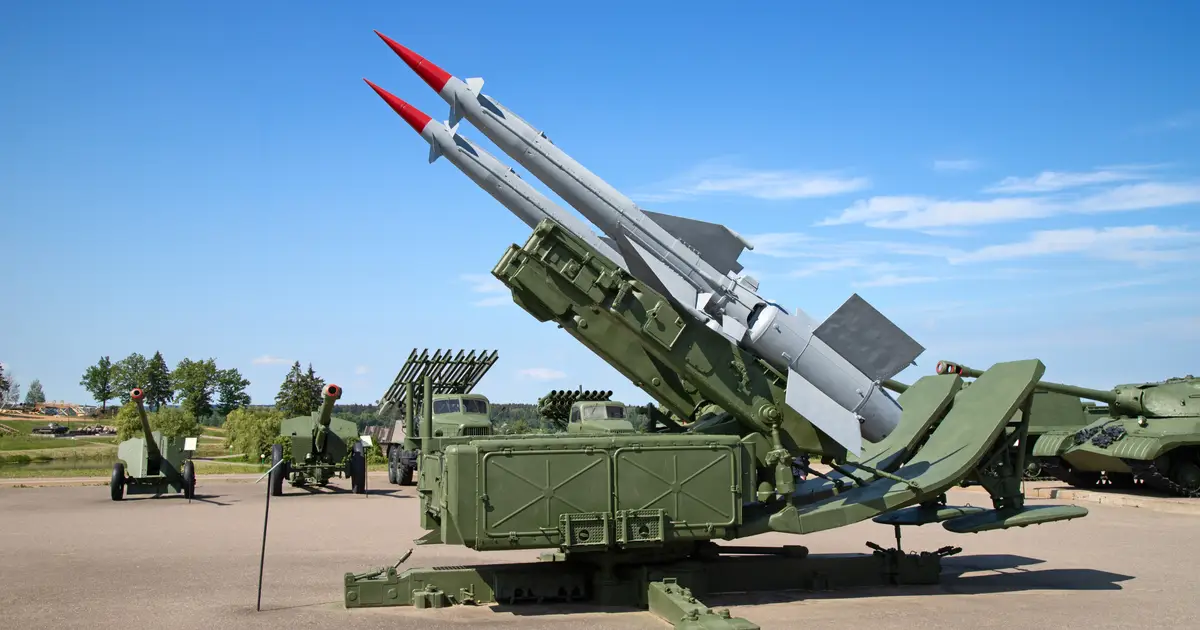
Global Military Spending Reaches $2.89 Trillion Amid Unprecedented Surge Since WWII
Global military expenditure has surged by 41% since 2016, hitting a record $2.89 trillion in 2025. This rapid increase, the sharpest since World War II, reflects a worldwide shift towards militarization driven by profound insecurity.
Military Spending Surges to Record Highs
Global military spending has experienced an unprecedented rise over recent years, with defense expenditure growing by nearly 41% between 2016 and 2025. This contrasts sharply with the approximate 16% growth recorded in the preceding decade. The 2025 figure saw global military spending increase by 9.4%, reaching a record USD 2.89 trillion. Current trends suggest that annual global defense expenditure could exceed USD 3 trillion by 2026, marking one of the steepest increases since World War II.
The scale of this expansion is substantial. Per capita military spending globally now stands at approximately USD 337, surpassing the annual per capita GDP in numerous countries. Military budgets collectively account for roughly 2.5% of global GDP, a historical high. Over 100 nations have increased their defense allocations within the last two years, indicating a rapid global movement towards large-scale militarization.
Europe leads this expansion, with an 83% increase in defense expenditure, largely propelled by the ongoing conflict in Ukraine. NATO members now represent over 55% of total global military spending, with many actively modernizing their armed forces. Asia and Oceania also show significant increases, reflecting heightened tensions across the Indo-Pacific region.
Key military importers include Ukraine, India, Saudi Arabia, Qatar, and Pakistan. The primary arms exporters remain the United States, China, Russia, and major European nations.
Drivers of Global Insecurity
Underlying these figures is a deeper global reality: nations increasingly perceive military power as critical for survival in an unstable world. Several factors contribute to this perspective.
Heightened Uncertainty and Insecurity
A primary driver of rising military expenditure is a pervasive sense of global insecurity. Intense geopolitical competition, economic sanctions, proxy conflicts, cyber warfare, terrorism, and strategic rivalries have fostered deep uncertainty across various regions. Economic tools are increasingly weaponized through sanctions, trade restrictions, and financial pressure, blurring the lines between economic competition and strategic warfare.
This insecurity has ignited a new global arms race. Europe anticipates potential Russian aggression. Several Southeast Asian countries express concern over Chinese expansionism. West Asia remains embroiled in instability and recurring conflicts, often amid American interventions. Smaller nations increasingly doubt the protective capacity of global superpowers during crises. Consequently, countries are fortifying their militaries, expanding alliances, and pursuing strategic deterrence to mitigate vulnerability in an unpredictable global environment.
Impact of Ongoing Conflicts
Recent military engagements have significantly accelerated global military spending. The war in Ukraine fundamentally reshaped Europe's security calculations, prompting nations that had reduced defense budgets post-Cold War to rebuild their armed forces at an unprecedented pace. Germany, Poland, and several Nordic countries are heavily investing in armored vehicles, long-range artillery, missiles, air defense systems, and stockpiling ammunition.
Similarly, Israeli military operations in Gaza and tensions with Iran have spurred military expansion across West Asia. In Asia, military tensions, including Operation Sindoor between India and Pakistan, have compelled both nations to enhance their defense preparedness. These conflicts underscore a critical lesson for leaders worldwide: strategic unpreparedness can incur substantial costs.
The global environment is entering an era where fear and insecurity increasingly dictate national priorities. The current security landscape is widely viewed as fragile, volatile, and unpredictable. Policymakers now widely accept that national security underpins economic stability, trade security, energy access, and geopolitical influence.
As a result, governments are allocating greater financial resources toward defense modernization, indigenous weapons production, military expansion, and technological superiority. While robust defense capabilities can enhance deterrence, they also pose questions regarding fiscal sustainability and the diversion of resources from critical sectors such as healthcare, education, infrastructure, and poverty eradication.
Multiple Geostrategic Turbulences
The global security paradigm has been fundamentally reshaped by a confluence of geopolitical tensions, border disputes, tariff wars, cyber threats, terrorism, and strategic competition among major powers. The world now experiences multiple simultaneous friction points across different regions, raising fears of prolonged conflict and instability.
Found this useful? Share it!
Interested in Finance Education?
Explore our CFA and investing courses — built for serious learners.