Reading this on Krawl? Register for free.
Unlock listen-aloud, reading history and personalised feeds — at zero cost.
Free registration unlocks the full Finance Desk
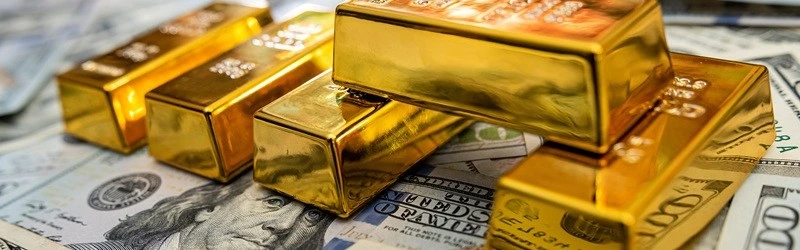
Gold's Geopolitical Pullback: From $4,812 Peak to $4,798 as US-Iran Dialogue Shifts Sentiment
Gold prices experienced a notable retreat from a one-month peak of $4,812.00 per ounce, settling at $4,798.89, as investor attention shifted towards potential de-escalation in US-Iran relations amidst persistent concerns over oil supply and the inter
Gold's Geopolitical Pullback: From $4,812 Peak to $4,798 as US-Iran Dialogue Shifts Sentiment
The global gold market witnessed a significant correction this week, as the precious metal eased from its one-month highs, driven by shifting geopolitical narratives concerning the United States and Iran. With investors keenly observing developments aimed at de-escalating hostilities in West Asia, gold’s safe-haven appeal temporarily diminished, even as crude oil prices remained robust amid lingering supply concerns surrounding the Strait of Hormuz.
Spot gold was recorded down 0.9 percent at $4,798.89 per ounce as of 0941 GMT, marking a retreat from its recent peak. Concurrently, US gold futures for June delivery also experienced a downturn, falling 0.6 percent to $4,821.30. This movement reflects a broader market re-evaluation of risk premiums that had previously propelled gold to its highest level since March 18, 2026.
The US-Iran Dynamic: A Catalyst for Market Re-calibration
The prospect of constructive dialogue between the US and Iran has emerged as a primary driver for the recent gold market adjustment. Any perceived reduction in geopolitical tensions tends to lessen the demand for traditional safe-haven assets like gold. While the talks aim to bring an end to hostilities, the simultaneous firmness in oil prices underscores the market's ongoing anxiety regarding potential disruptions to energy supplies, particularly through the vital Strait of Hormuz.
This dynamic highlights the intricate relationship between geopolitics, commodity markets, and investor sentiment. A less volatile geopolitical landscape typically allows capital to flow back into riskier assets, impacting gold's valuation.
Key Metrics: An Overview of Gold's Recent Performance
Analyzing the recent trajectory of gold prices reveals a market grappling with multiple forces. From March 31, '26, to April 15, '26, gold experienced a Month-To-Date (MTD) increase of 3.09 percent. The price moved from $4,668.00 per ounce at the end of March to a notable high of $4,812.00 per ounce by mid-April, reflecting a period of heightened demand. However, the latest figures indicate a pullback from this peak.
It is also crucial to contextualize this movement within a broader timeframe. Bullion prices have reportedly fallen close to 10 percent since February 28, the date marking the onset of the US and Israel's conflict with Iran. This initial escalation sent oil prices soaring, creating an environment of increased uncertainty that initially supported gold. The current retreat, therefore, signals a potential shift in market perception regarding the longevity and intensity of these geopolitical risks.
The Intricate Dance: Gold, Oil, and Monetary Policy
The relationship between gold, oil prices, and global monetary policy is complex and multifaceted. As articulated by a UBS analyst, the notion that “central banks can cut rates” can significantly influence gold's appeal. Gold is widely regarded as an inflation hedge; however, its status as a non-yielding asset means that higher interest rates, which typically offer better returns on alternative investments, tend to dampen its attractiveness. Conversely, a low interest rate environment, often a result of central bank rate cuts, can bolster demand for gold as investors seek assets that perform well in a low-yield landscape.
Moreover, there exists a "spurious correlation" between equities, gold, and oil price developments. Low oil prices are generally seen as beneficial for economic growth, which in turn supports equity markets. For gold, low oil prices can contribute to lower inflation expectations, potentially paving the way for central banks to ease monetary policy. This scenario—lower inflation and the prospect of rate cuts—is often supportive of gold prices, as it reduces the opportunity cost of holding the non-yielding asset.
However, the current situation presents a nuanced picture: while US-Iran talks might signal de-escalation, sustained high oil prices due to supply concerns could fuel inflation. If central banks prioritize combating inflation, they might maintain higher interest rates, which could limit gold's upside potential despite geopolitical tremors.
Implications for Finance Professionals and CFA Candidates
For CFA candidates and finance professionals, these market dynamics offer several key takeaways:
- Geopolitical Risk Assessment: The swift reaction of gold to US-Iran dialogue underscores the necessity of integrating geopolitical risk into asset allocation models. Geopolitical events can trigger rapid shifts in safe-haven demand.
- Inter-commodity Relationships: Understanding the correlations, spurious or otherwise, between gold, oil, and equity markets is critical. Changes in one market often have ripple effects across others, demanding a holistic analytical approach.
- Monetary Policy Nuances: The interplay between inflation expectations, interest rate trajectories, and gold's appeal as a non-yielding asset requires careful monitoring. Central bank forward guidance and actual policy actions remain pivotal for gold's valuation.
- Hedging Strategies: While gold typically serves as an inflation hedge, its performance in a high-interest-rate environment can be constrained. Professionals must evaluate whether gold effectively serves its intended hedging purpose under prevailing monetary conditions.
Conclusion
Gold's recent pullback from its one-month peak, driven by the evolving US-Iran negotiations, illustrates the sensitivity of commodity markets to geopolitical shifts. While the immediate outlook for gold will be influenced by the progress of these diplomatic efforts and the resolution of oil supply concerns, its longer-term trajectory remains intertwined with global inflation trends and the monetary policy responses of major central banks. Investors and analysts must continue to navigate this complex landscape, balancing the traditional safe-haven appeal of gold against the opportunity costs presented by prevailing interest rate environments.
Found this useful? Share it!
Interested in Finance Education?
Explore our CFA and investing courses — built for serious learners.
More from Krawl Insights

Unpacking Mr. Market's erratic behavior. From geopolitical tensions to surprising AI pivots.

GM's $2.8 Billion Korean Gambit: Navigating Tariffs, Labor Arbitrage, and Global Production Strategy