Reading this on Krawl? Register for free.
Unlock listen-aloud, reading history and personalised feeds — at zero cost.
Free registration unlocks the full Finance Desk
High-Speed Rail in Emerging Markets: A Mispriced Infrastructure Bet
The prevailing skepticism surrounding emerging market high-speed rail projects often overlooks critical, long-term economic and geopolitical catalysts. Cost overruns and execution risks are acknowledged for this strategic infrastructure.
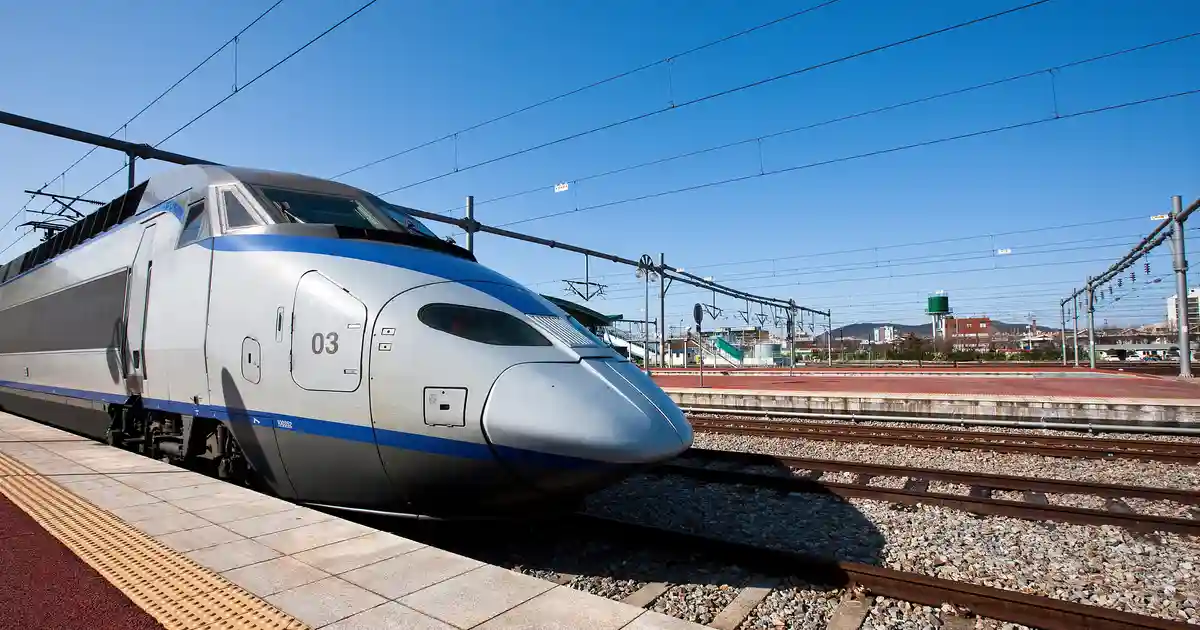
A recent photograph of the Mumbai-Ahmedabad High-Speed Rail (MAHSR) corridor, showcased by the Indian railway ministry, depicts India's first bullet train project making rapid progress. This visual update, illustrating tangible advancements in a marquee infrastructure initiative, arrives amidst a backdrop of ongoing debate regarding the financial viability and strategic imperative of such large-scale public works in emerging markets. The visible progress challenges a widespread market view that often dismisses these projects as susceptible to perpetual delays and cost inflation, thereby understating their potential economic multipliers and long-term value.
The Consensus View on EM Infrastructure
The prevailing market consensus frequently frames emerging market high-speed rail projects through a lens of inherent risk: significant capital expenditure, extended gestation periods, and a propensity for political interference and bureaucratic bottlenecks. Analysts often point to historical examples of infrastructure endeavors that have suffered from severe cost overruns, exemplified by certain past projects where final costs exceeded initial estimates by as much as 300%. The MAHS&R project itself, with its 508-km length and extensive civil works across Gujarat, Maharashtra, and the Union Territory of Dadra & Nagar Haveli, is frequently cited as a prime candidate for such risks. Doubts persist regarding the return on investment for passenger-carrying infrastructure in regions with diverse economic strata, and the substantial land acquisition challenges are viewed as a consistent drag on project timelines and financial forecasts. This perspective often discounts the strategic, non-quantifiable benefits, focusing strictly on direct financial returns and project-specific execution hurdles.
Re-evaluating the Analytical Case
The analytical case for projects like the MAHSR extends beyond conventional cost-benefit analyses, incorporating strategic and geopolitical considerations often underweighted by the consensus. The project's execution, benefiting from technical and financial assistance from the Japanese government, significantly mitigates typical emerging market construction and financing risks. Japanese involvement, particularly in advanced signaling and rolling stock manufacturing, provides a critical layer of expertise and quality assurance. Civil works at key stations, such as the Bandra Kurla Complex (BKC), have achieved 91% progress on excavation, with 100% completion of basement slab at Level-4. Furthermore, 17 river bridges have been completed, with construction underway on four major river bridges across the Narmada, Mahi, Tapti, and Sabarmati rivers. The project's emphasis on indigenous manufacturing of high-speed rail systems and components, under the 'Make in India' and 'Aatmanirbhar Bharat' initiatives, aims to reduce import dependence and foster a domestic high-tech manufacturing ecosystem. This strategic pivot not only enhances economic self-reliance but also creates a robust platform for future high-speed rail corridor development across the region, potentially unlocking significant long-term industrial synergies.
The Non-Obvious Read: Geopolitical Integration and Supply Chain Resilience
The non-obvious read on projects such as the MAHSR transcends mere transportation improvements; it represents a foundational investment in regional economic integration and supply chain resilience. The corridor, connecting major industrial and urban centers, acts as a critical artery for enhanced logistics efficiency, reduced transit times, and facilitated movement of labor and goods. This integration effect is particularly salient in a post-pandemic global economy prioritizing localized and diversified supply chains. Moreover, strategic collaborations with entities like the Integral Coach Factory (ICF) and Bharat Earth Movers Limited (BEML) underscore a long-term vision to establish a self-sufficient, high-tech rail industry. Such investments, while demanding significant upfront capital, build enduring economic capacity and provide a tangible counter-narrative to the prevailing fragmentation in global trade. The project's design speed of 280 kmph is not merely an engineering feat but a strategic enabler of heightened economic velocity across an expansive region.
The Position
The market's persistent underestimation of emerging market high-speed rail projects like MAHSR, especially those with robust international backing and a clear indigenous manufacturing mandate, overlooks their profound long-term strategic value. These ventures are not simply infrastructure deployments but critical enablers of economic transformation, supply chain strengthening, and geopolitical positioning. The current pricing fails to adequately reflect the multi-decade economic returns and resilience dividends generated by such strategic national and regional investments.
Found this useful? Share it!
Interested in Finance Education?
Explore our CFA and investing courses — built for serious learners.