Reading this on Krawl? Register for free.
Unlock listen-aloud, reading history and personalised feeds — at zero cost.
Free registration unlocks the full Finance Desk
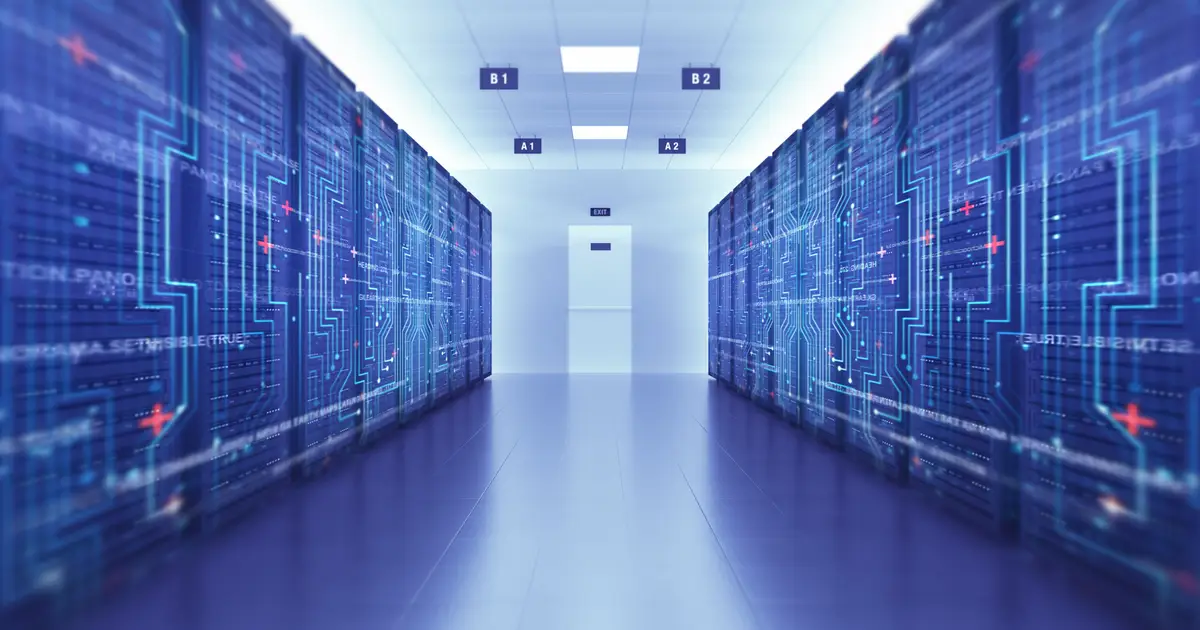
Hyperscalers' Trillion-Dollar AI Gamble Demands Unprecedented Productivity Growth
Hyperscale tech firms are committing trillions of USD to AI infrastructure, a capital allocation so vast it requires nearly three times the productivity growth by 2030 to justify spending. Finance experts warn this investment, projected to hit $1.1…
The High Bar for AI Capital Returns
Jessica Wachter, a finance professor at the University of Pennsylvania's Wharton School, recently analyzed the financial implications of AI infrastructure spending. Rather than forecasting AI's market penetration, her approach assesses the earnings growth hyperscalers need to justify their massive capital outlays. She and a collaborator estimate that these expenditures will approach 1.1 trillion USD by 2027.
Their findings indicate that AI companies must boost their productivity by a factor of 2.7 by 2030 to achieve a break-even point, factoring in capital costs and a 15% return on assets. Wachter views this as achievable, potentially mimicking the US IT boom of the mid-1990s. However, she notes that achieving such growth by 2030 compresses significant economic expansion into a short timeframe. Failure to meet these profitability targets could jeopardize companies' ability to service debt, leading to bankruptcy. Wachter, a former chief economist for the SEC, stated that if a productivity surge "fails to materialize," the current buildout "will be the largest misallocation of capital in history."
Trillions Committed Against Modest Revenues
The scale of current AI infrastructure investment carries substantial risk. Hyperscalers are projected to spend approximately 750 billion USD this year alone on new data centers, with no signs of abatement. Projections suggest that total AI capital investments from major hyperscale players—Alphabet, Microsoft, Amazon, Meta, and Oracle (a partner to OpenAI)—could exceed 5 trillion USD over the next four years.
This represents one of the largest capital investment cycles by any industry in history. However, a significant imbalance persists between spending and revenue generation. Gary Gensler, a professor at MIT's Sloan School and former SEC chair, points out that while hyperscalers plan to spend trillions, total AI revenues are currently between 150 billion USD and 200 billion USD this year. He emphasizes that "the spending does not have commensurate revenues _yet_," framing the core question around the future payoff of these investments.
Mounting Debt and Negative Free Cash Flow
The financial health of these major AI companies and the broader US economy hangs on the outcome of this investment, which could soon account for 3% of US GDP. The profitability and utility of these multi-billion-dollar data centers remain uncertain. Despite rapid advancements in AI models, future compute capacity requirements are speculative. Efficiency gains could reduce the need for raw computational power, or demand for AI services might slow, with customers opting for more cost-effective solutions.
Risks to investors and the economy have intensified this year as AI firms increasingly finance data center expansion through debt. For the group, free cash flow—operating cash flow minus capital expenditures—is anticipated to turn negative. Alphabet, historically a strong cash generator, reported a free cash deficit of 5.9 billion USD in its latest quarter, its first shortfall since 2004, despite nearly 120 billion USD in revenue, due to substantial AI infrastructure spending. While many of these companies possess deep financial reserves, rising debt costs are prompting scrutiny from some investors.
Found this useful? Share it!
Interested in Finance Education?
Explore our CFA and investing courses — built for serious learners.