Reading this on Krawl? Register for free.
Unlock listen-aloud, reading history and personalised feeds — at zero cost.
Free registration unlocks the full Finance Desk
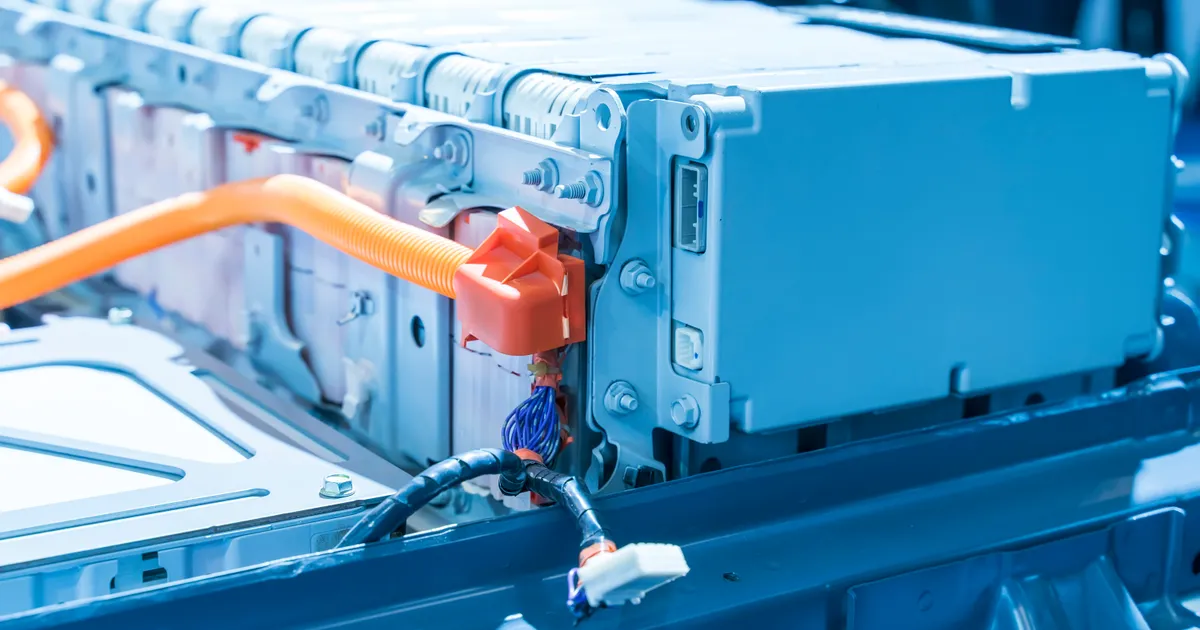
India: Domestic Manufacturing Lag Threatens EV Transition Amid Soaring Lithium Import Reliance
India's burgeoning electric vehicle (EV) market and an ambitious domestic manufacturing push are on a collision course. Despite significant incentives, the slow operationalization of local battery and mineral processing capacity could deepen imports.
The surging demand for lithium, a critical component in electric vehicle (EV) batteries, underscores a fundamental tension in global decarbonization efforts. While the rapid expansion of EV markets is celebrated for its environmental benefits, the underlying supply chains often reveal deep-seated dependencies. In India, for instance, lithium imports have skyrocketed more than tenfold in eight years, reaching USD 432.33 million during April-February FY26, a significant jump from USD 36.65 million in FY18. This dramatic increase, though indicative of robust EV adoption, simultaneously exposes a chink in the armor of self-reliance, signaling a potential long-term vulnerability rather than merely a transitional phase.
The Consensus View on EV Growth
Most analysts interpret the surge in lithium imports primarily as a positive indicator of the accelerating EV transition. The prevailing view posits that strong consumer demand for EVs, evidenced by an estimated 8.5% penetration rate, is the primary driver. This demand, coupled with expanding deployment of energy storage systems and growth in consumer electronics manufacturing, creates a robust market pull. The narrative often highlights government initiatives such as the Production-Linked Incentive (PLI) scheme for Advanced Chemistry Cell (ACC) manufacturing (USD 186.76 million), the National Critical Mineral Mission (USD 352.78 million), and the Critical Mineral Recycling Incentive Scheme (USD 15.56 million), as foundational steps toward building a localized EV ecosystem. From this perspective, the current import reliance is a temporary bottleneck that will ease as domestic manufacturing capacity comes online, supported by these strategic incentives.
Evaluating the Analytical Disconnect
While the growth in EV adoption is undeniable, the analytical case for a sustainable domestic supply chain is less robust than commonly assumed. Imports stood at USD 264.16 million in FY25, a nearly 48% increase in the first 11 months of FY26 alone, highlighting an escalating dependence. The crucial discrepancy lies between policy intent and execution. The ACC PLI scheme, launched in 2021 with a target of 50 GWh of domestic cell manufacturing capacity, has seen limited operational progress. For example, among selected beneficiaries, only Ola Electric has commissioned a small portion of its allocated capacity—approximately 1.5 GWh against a 20 GWh target. Major awardees like Reliance New Energy and Rajesh Exports have yet to significantly operationalize their committed capacities. This delay indicates that despite substantial financial incentives, scaling domestic production remains challenging, leaving the nation heavily reliant on imported lithium and battery materials, predominantly from China-linked global supply chains. The surge in imports, therefore, reflects a strategic oversight, not just market growth.
The Non-Obvious Read on Policy Efficacy
The persistent gap between incentive allocation and operational outcomes suggests a deeper structural issue beyond mere implementation delays. Industry experts acknowledge that EV adoption has accelerated rapidly, but the localization of battery manufacturing has not kept pace. This indicates a potential miscalibration in policy design or a fundamental challenge in attracting and mobilizing the necessary capital, technology, and expertise. The lack of meaningful domestic lithium extraction and limited recycling capacity further exacerbates the problem, with analysts warning that without robust domestic refining, mining, and recycling ecosystems, the country risks replacing dependence on crude oil with a new reliance on imported critical minerals. The non-obvious read is that current policies, while well-intentioned, are insufficient to create a resilient, vertically integrated supply chain, leading to entrenched import dependence despite high-level commitments.
The Position
The current trajectory of lithium imports unequivocally signals a critical vulnerability in the domestic EV and renewable energy transition. A robust and accelerated overhaul of existing production-linked incentives, coupled with enhanced inter-governmental and industry coordination, is essential. Without a significant and immediate boost to domestic manufacturing and processing capacities, the nation risks deepening its reliance on external supply chains, undermining long-term economic stability and strategic autonomy.
Found this useful? Share it!
Interested in Finance Education?
Explore our CFA and investing courses — built for serious learners.