Reading this on Krawl? Register for free.
Unlock listen-aloud, reading history and personalised feeds — at zero cost.
Free registration unlocks the full Finance Desk
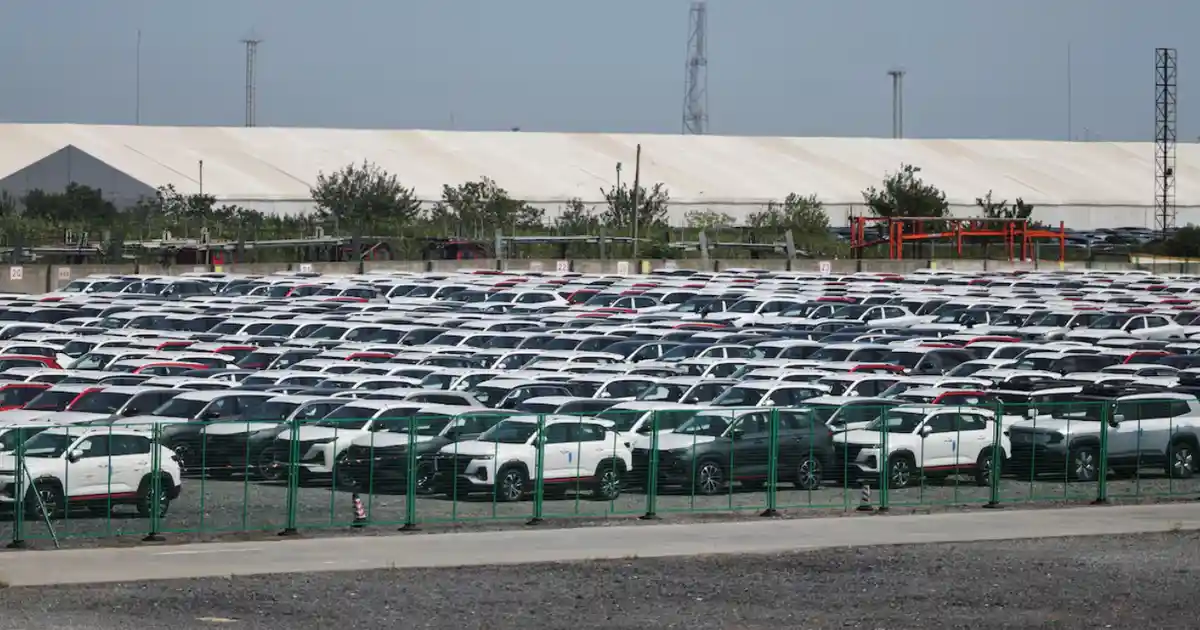
India's CAFE III: Navigating the $26.83M-$48.29M Carbon Credit Market for Automakers
India's proposed CAFE III norms introduce a pioneering passbook-like credit-debit system, offering automakers a financial pathway to manage stringent fuel efficiency standards through tradable carbon credits, priced between $26.83 and $48.29 per gram
Decoding India's CAFE III: A New Financial Paradigm for the Auto Sector
India is poised to introduce a groundbreaking regulatory framework, the third iteration of its Corporate Average Fuel Economy (CAFE III) norms, featuring a unique passbook-like credit-debit system for automakers. This move, scheduled to take effect from April 1, 2027, aims to provide a structured financial mechanism for companies to comply with stringent emission standards, which are widely considered among the world's toughest. For CFA candidates, ICAI students, and finance professionals, understanding this system's nuances is critical, as it redefines capital allocation, risk management, and market dynamics within the automotive industry.
The Passbook System: Mechanism and Financial Flows
At its core, CAFE III introduces a bank passbook-like system for automakers, managed by the Bureau of Energy Efficiency (BEE). Companies that surpass their fuel efficiency targets will accumulate 'credits,' recorded as a positive balance in their passbook. Conversely, those that fall short will incur 'debits,' attracting penalties. These debits can be offset by either purchasing credits directly from the BEE or through credit trading with other automakers.
The system's financial backbone is the pricing of these credits. Automakers will be permitted to purchase credits from the BEE at fixed rates annually from 2028 to 2032. These rates will range from approximately $26.83 to $48.29 per gramme of CO/km. This direct purchase option from the regulator is a distinct Indian approach, differing from purely market-driven systems elsewhere. While credit trading among automakers will also be allowed, mirroring models like California's, the direct BEE intervention adds a unique layer of market control and price stability.
Capital Allocation and Investment Implications
For automakers, the central financial question is whether purchasing these credits represents a more cost-effective pathway to compliance than investing in advanced fuel-efficient technologies. This decision will directly impact capital allocation strategies. Companies will need to perform detailed cost-benefit analyses, weighing the one-time and ongoing costs of R&D and manufacturing upgrades against the recurring expense of credit purchases. A high credit price could incentivize greater investment in green technologies, while a lower price might encourage reliance on credit acquisition.
The move compels automakers to integrate carbon emission management into their financial planning and operational strategies. Treasury departments will need to factor in potential credit purchase costs or revenue from credit sales into their cash flow forecasts and P&L statements. Furthermore, the two block periods for penalty imposition (2027-28 to 2029-30 and 2030-31 to 2031-32) necessitate strategic planning over multi-year horizons, potentially impacting debt financing decisions and equity valuations.
Global Context and Market Parallels
While India's system introduces unique elements, parallels can be drawn with existing schemes like California's fully transparent credit trading among OEMs and Europe's pooling among manufacturers. However, the direct regulatory sale of credits at fixed rates distinguishes the Indian model. This structured approach may offer greater predictability compared to purely volatile market-based systems, potentially mitigating some financial risks for automakers in the initial phases.
The introduction of a regulated credit purchase mechanism, as described by the Bureau of Energy Efficiency, represents a 'distinct Indian approach' not available in other benchmark jurisdictions. This means finance professionals assessing the Indian auto market cannot simply apply existing global models but must account for the specific regulatory arbitrage and pricing dynamics inherent in CAFE III.
Challenges, Opportunities, and Expert Outlook
Experts highlight several critical areas. A key point of contention is whether buying credits will genuinely be a cheaper pathway for automakers, or if it will mask structural weaknesses in developing the required technological capabilities. The BEE's credit price will be a major determinant in this equation. The proposed framework also requires greater clarity on the penalty mechanism, cost-benefit analysis, and its alignment with the Energy Conservation Act, as noted by Sharif Qamar of The Energy and Resources Institute.
From an investment perspective, this framework creates both challenges and opportunities. Automakers with robust R&D capabilities in fuel efficiency could generate significant credit surpluses, transforming compliance into a potential revenue stream. Conversely, those struggling to meet norms might face increased compliance costs, impacting their bottom line and competitive positioning. This could spur consolidation or strategic partnerships aimed at achieving fleet-wide efficiency targets.
The system's effectiveness will depend on consistent monitoring, transparent reporting, and timely course corrections. The annual maintenance of the passbook and penalty imposition at the end of defined block periods are designed to enable closer oversight and stronger alignment with environmental goals.
Conclusion
India's CAFE III norms, with their innovative passbook-like credit-debit system and directly priced emission credits, mark a significant evolution in environmental regulation and financial engineering within the automotive sector. For global finance professionals, it presents a compelling case study in how developing economies are designing unique market mechanisms to achieve sustainability goals. Navigating this new landscape will require sophisticated financial modeling, a keen understanding of regulatory economics, and a strategic approach to capital allocation, ensuring that automakers can balance profitability with their environmental responsibilities within the Indian market.
Found this useful? Share it!
Interested in Finance Education?
Explore our CFA and investing courses — built for serious learners.
More from Krawl Insights

Unpacking Mr. Market's erratic behavior. From geopolitical tensions to surprising AI pivots.
GM's $2.8 Billion Korean Gambit: Navigating Tariffs, Labor Arbitrage, and Global Production Strategy