Reading this on Krawl? Register for free.
Unlock listen-aloud, reading history and personalised feeds — at zero cost.
Free registration unlocks the full Finance Desk
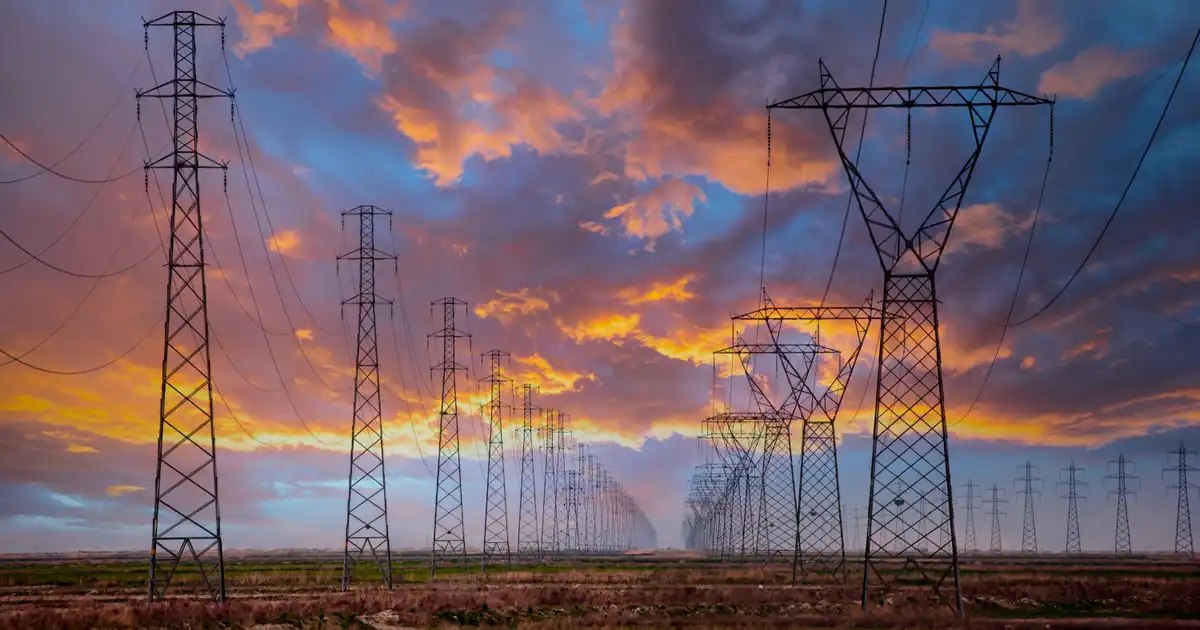
India's Energy Conundrum: Balancing a $42.38 Billion Renewable Bet with Looming Tariff Shocks
India confronts a complex energy transition, aiming for substantial renewable capacity by 2025 with an estimated $42.38 billion investment.
Navigating India's Energy Transition: A Macro-Financial Perspective
India, a rapidly developing economic powerhouse, faces a critical juncture in its energy policy. The nation is grappling with the intricate challenge of balancing its escalating energy demand—essential for sustained economic growth—with the urgent imperative of transitioning to a cleaner, more sustainable energy matrix. This delicate balance presents significant financial implications, potential market disruptions, and strategic opportunities for investors and policy makers alike, as outlined in recent analysis.

The Dual Mandate: Growth and Green Transition
The core of India's energy dilemma lies in its commitment to ambitious economic growth alongside environmental stewardship. The country's existing energy infrastructure remains heavily reliant on fossil fuels, particularly coal, which currently accounts for a substantial portion of its electricity generation. However, India is also charting an aggressive course towards renewable energy, aiming to significantly ramp up its capacity by 2025.
This dual mandate creates a complex financial landscape. On one hand, the reliance on imported fossil fuels, such as liquefied natural gas (LNG), exposes India to global price volatility and geopolitical risks, directly impacting energy security and balance of payments. On the other hand, the rapid deployment of renewable energy technologies necessitates massive capital investment, alongside the challenge of integrating intermittent power sources into a stable grid.
The Financial Implications of Renewable Energy Deployment
India's commitment to renewable energy is ambitious, with an estimated investment of approximately $42.38 billion expected to bolster capacity significantly by 2025. While this represents a monumental opportunity for green finance and sustainable investing, it also carries potential financial burdens for consumers.
One of the critical concerns is the potential for significant tariff shocks. Analysts from Wood Mackenzie project that in a scenario where India aggressively decarbonizes without adequate carbon pricing, power tariffs could increase by an average of $0.000246 per kilowatt-hour (kWh) annually until 2026. This translates into a substantial increase for households, with current electricity costs of around $0.0642 per kWh potentially rising to $0.0888 per kWh. Such an increase could have profound socio-economic impacts, particularly on lower-income households and energy-intensive industries, posing a challenge to inflation management and economic competitiveness.
The financial architecture supporting this transition is crucial. While the cost of renewables continues to fall—solar PV has seen an 87% reduction since 2010, and battery storage an impressive 93%—the initial capital outlay for large-scale projects remains substantial. This necessitates innovative financing mechanisms, including green bonds, blended finance, and international collaborations, to mobilize the required capital without unduly burdening the national exchequer or end-consumers.
Fossil Fuels: A Stubborn Reality Amidst Transition
Despite the aggressive push for renewables, fossil fuels, particularly coal, remain deeply entrenched in India's energy mix. Coal imports alone reached 126 million tonnes (mt) in the past fiscal year, underscoring the persistent demand. This reliance stems from the need for baseload power to support industrial growth and maintain grid stability, especially as renewable sources, by their nature, are intermittent.
Furthermore, global energy market dynamics play a significant role. Volatility in international crude oil and LNG prices directly impacts India's import bill and domestic energy costs. The article highlights how geopolitical events and supply disruptions have forced industries and households to adapt, with residential consumers facing liquefied petroleum gas (LPG) supply challenges and commercial establishments adopting solar-powered canteens during LNG shortages. This underscores the strategic importance of energy self-sufficiency and diversification.
Renewables: A National Security Imperative
The International Renewable Energy Agency (IRENA) advocates for renewables not just as an environmental necessity but as a critical component of national security. As IRENA Director-General Francesco La Camera notes, decreasing costs of renewables transform the economics of power generation, making over 85% of new renewable installations cheaper than fossil fuel alternatives.
India's renewable energy capacity increased from 14.2% in 2016 to an estimated 20.2% by 2025, with an ambitious target of 692 gigawatts (GW) by 2025. This rapid expansion, driven by policy support and technological advancements, positions India as a significant player in the global renewable energy landscape. For finance professionals, this translates into burgeoning investment opportunities across solar, wind, and energy storage sectors, alongside the development of smart grid technologies and associated infrastructure.
Investment Landscape and Future Outlook
The strategic value of energy decarbonization is immense. It provides a robust hedge against fossil fuel price volatility, enhances energy independence, and mitigates climate risks. For institutional investors, private equity firms, and development finance institutions, India's energy transition presents a multi-decade investment thesis. The government's proactive steps in enhancing renewable energy deployment and strengthening grid infrastructure are crucial de-risking factors.
Moreover, the integration of new technologies, such as green hydrogen and advanced battery storage, will open up new frontiers for investment. However, navigating this landscape requires a deep understanding of India's regulatory framework, local market dynamics, and the evolving financial instruments available to support such large-scale capital deployment.
India's energy journey is a microcosm of the global energy transition: complex, capital-intensive, and strategically vital. For finance professionals, understanding the interplay of policy, technology, market forces, and consumer economics will be key to unlocking the opportunities and managing the risks inherent in this transformative shift.
Found this useful? Share it!
Interested in Finance Education?
Explore our CFA and investing courses — built for serious learners.
More from Krawl Insights

Unpacking Mr. Market's erratic behavior. From geopolitical tensions to surprising AI pivots.

GM's $2.8 Billion Korean Gambit: Navigating Tariffs, Labor Arbitrage, and Global Production Strategy