Reading this on Krawl? Register for free.
Unlock listen-aloud, reading history and personalised feeds — at zero cost.
Free registration unlocks the full Finance Desk
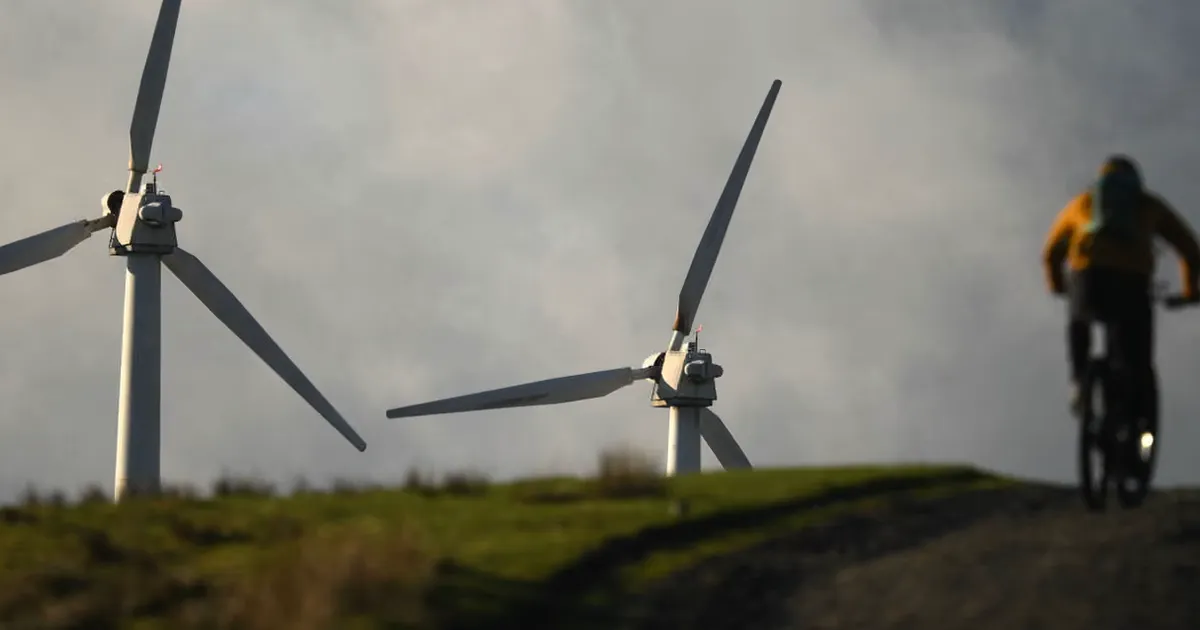
India's Green Ambitions: Navigating the $0.12/kWh Offshore Wind Hurdle and $0.08/kWh Tariff Targets
India's Ministry of New and Renewable Energy outlines strategic priorities to de-risk green investments, tackling transmission gridlock, achieving $0.08/kWh offshore wind tariff targets amidst rising costs of up to $0.12/kWh, and resolving substantia
Driving India's Renewable Energy Transition: A Strategic Overview
India's Ministry of New and Renewable Energy (MNRE), led by Secretary Santosh Kumar Sarangi, is spearheading an ambitious transformation of the nation's energy landscape. While the 'vanilla' solar segment has seen robust growth, significant challenges remain, particularly in transmission infrastructure, the nascent offshore wind sector, and addressing stranded renewable energy (RE) capacity. For CFA candidates, ICAI students, and finance professionals, understanding these complexities is crucial for evaluating investment opportunities and risks within one of the world's largest and fastest-growing clean energy markets.
Bolstering Transmission: The Backbone of Green Energy
A top priority for the MNRE is the strategic enhancement and upgrade of India's transmission infrastructure. This isn't merely about expanding physical lines but ensuring the grid can dynamically support and integrate the escalating volume of renewable energy. The goal is a resilient network that grows in lockstep with RE ambitions, particularly for distributed RE penetration across more states.
- Current Constraints: The concentrated deployment of solar and wind in just five states (Rajasthan, Gujarat, Maharashtra, Tamil Nadu, and Karnataka) strains existing transmission lines. These regions, while rich in RE potential, face challenges related to land acquisition and right-of-way, which are critical for new projects.
- Strategic Solutions: The MNRE is implementing a multi-pronged approach. This includes accelerating modular transmission projects, which can be completed within 1.5 to 2 years, in contrast to the 3.5 to 5 years required for long-distance lines. Furthermore, advanced technologies, including artificial intelligence (AI), are being leveraged to assess available capacity margins. A significant policy change is the introduction of the General Network Access (GNA) splitting mechanism under the Third Amendment to the Connectivity and GNA Regulations, allowing transmission access to be segmented between solar and non-solar hours, optimizing grid utilization.
Offshore Wind: Navigating High Costs and Investment Hurdles
The offshore wind sector presents a unique set of challenges. Despite India's considerable coastline, initial bids for projects in Gujarat failed to attract developers. While surveys are complete for a Tamil Nadu project, a tender is still pending, highlighting a cautious approach from investors.
- Cost Dynamics: Earlier, tariffs for offshore wind were anticipated in the range of $0.08 to $0.09 per unit. With Viability Gap Funding (VGF), this could have been brought down to an acceptable level of approximately $0.04 per unit. However, current costs have escalated significantly, now estimated between $0.10 and $0.12 per unit. This increase is primarily driven by rising steel prices and the increasing cost of undersea cables, both critical components for offshore wind farm development.
- Import Dependency & Project Size: A major disincentive for large-scale investment is the significant reliance on imported equipment, including turbines, blades, and masts. The relatively small project sizes (500 megawatts to 1 gigawatt) currently being tendered are not sufficiently attractive to prompt developers to invest in local manufacturing infrastructure. The MNRE is re-evaluating the appropriate level of VGF and seeking more favourable market conditions to de-risk these projects and encourage domestic manufacturing.
Addressing Stranded Capacity: A Market Alignment Imperative
A notable concern has been the more than 42 gigawatts (GW) of stranded RE capacity due to distribution companies (discoms) refusing to sign power purchase agreements. While uptake has improved, approximately 16 GW of this capacity, largely within hybrid projects, remains a work in progress. This issue stems from high discovered tariffs and a limited appetite among discoms for standard 'vanilla' solar projects.
- Policy Response: The Solar Energy Corporation of India (SECI) has been tasked with designing bids that align more closely with discoms' load profiles. This strategic shift aims to improve off-take and better integrate RE into the grid by addressing the specific demand characteristics of discoms, moving beyond generic purchase agreements to more tailored solutions.
Investment Implications and the Path Forward
For finance professionals, these developments signal both risks and opportunities. Investments in transmission infrastructure upgrades, smart grid technologies, and manufacturing capabilities for RE components will be critical. The re-evaluation of VGF for offshore wind, alongside efforts to align project bids with discom demand, suggests a dynamic policy environment aimed at stabilizing the market and enhancing financial viability.
The transition to green energy in India is not merely an environmental imperative but a significant economic and financial undertaking. Success hinges on a robust policy framework, technological innovation, and a clear pathway for capital deployment, all while navigating the complexities of market forces and infrastructure development.
Found this useful? Share it!
Interested in Finance Education?
Explore our CFA and investing courses — built for serious learners.
More from Krawl Insights

Unpacking Mr. Market's erratic behavior. From geopolitical tensions to surprising AI pivots.

GM's $2.8 Billion Korean Gambit: Navigating Tariffs, Labor Arbitrage, and Global Production Strategy