Reading this on Krawl? Register for free.
Unlock listen-aloud, reading history and personalised feeds — at zero cost.
Free registration unlocks the full Finance Desk
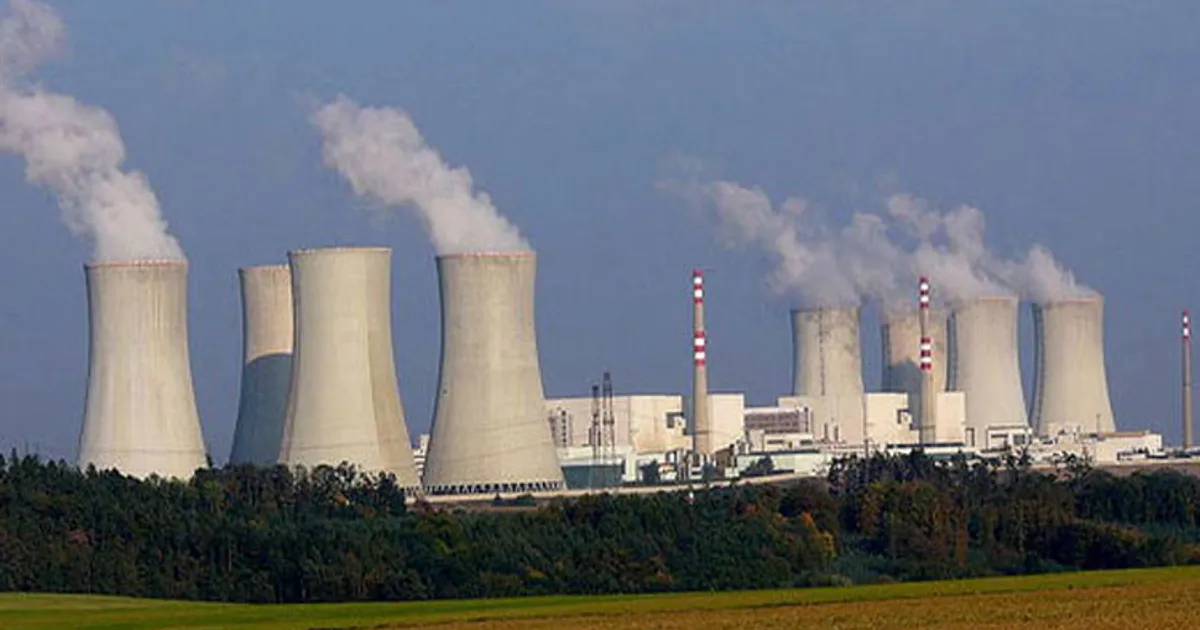
India's Nuclear Power FDI Policy: $2.37M/MW Costs & $0.06/Unit Tariffs Challenge Private Sector Engagement
India's Atomic Energy Commission has opened its nuclear power sector to foreign direct investment, targeting 100 GW by 2047, but attracting private capital faces challenges from high project costs, 13-year timelines amongst several others.
India's Nuclear Power FDI Policy: A Strategic Pivot for Energy Security
In a significant move poised to reshape India’s energy landscape, the Atomic Energy Commission (AEC) has officially cleared a new Foreign Direct Investment (FDI) policy for the nuclear power sector. This landmark decision, announced on April 17, marks a pivotal step towards integrating private capital into a domain traditionally dominated by state-owned entities. The policy aligns with the ambitious Sustainable Harnessing and Advancement of Nuclear Energy for Transforming India (SHANTI) Act, 2025, signaling a long-term strategic commitment to nuclear power as a cornerstone of the nation’s energy future.
For global finance professionals, this development presents both a nascent opportunity and a complex set of challenges. While the opening of such a capital-intensive sector to foreign investment is inherently attractive, critical concerns regarding project costs, development timelines, and the viability of proposed tariffs demand rigorous analytical scrutiny.
Unlocking Investment: The Vision Behind the FDI Policy
The AEC’s approval of the FDI policy is not merely a regulatory update; it's a strategic imperative aimed at accelerating India's nuclear energy capacity. Seema S Jain, a member of the Department of Atomic Energy (DAE), confirmed that “FDI initiatives are in the pipeline,” underscoring the government’s proactive stance. India aims to achieve an impressive 100 Gigawatts (GW) of nuclear capacity by 2047, a target that necessitates substantial and sustained investment far beyond what public sector enterprises can alone provide.
This policy is designed to foster private sector participation across various segments of the nuclear power value chain, from infrastructure development to operational expertise. The engagement of global players could bring not only financial resources but also advanced technological know-how and efficient project management practices, crucial for a sector known for its complexity and high barriers to entry.
The Economic Calculus: Costs, Tariffs, and Investment Hurdles
While the intent is clear, the path to attracting significant private capital is fraught with economic considerations. A key data point highlighted is the standard baseline cost of approximately $2.37 million per Megawatt (MW). This substantial capital expenditure, coupled with the long gestation periods typical of nuclear projects, necessitates innovative financing models, as DAE and NTPC Ltd. are reportedly exploring.
Adding to the complexity are the proposed tariffs. Ghanshyam Prasad, Chairman of the Central Electricity Authority (CEA), emphasized the need to reduce tariffs, citing a range of $0.06 to $0.07 per unit for newer plants. For investors, the interplay between high upfront capital costs and relatively low, regulated tariffs will be a critical determinant of project internal rates of return (IRRs) and overall financial viability. Analysts will need to model these cash flows meticulously, factoring in operational expenses, financing costs, and regulatory stability.
Operational Bottlenecks and the Call for Efficiency
Beyond financial metrics, operational efficiency and project timelines present significant hurdles. Currently, commissioning a nuclear power project in India can take around 13 years, encompassing regulatory approvals and implementation. The CEA Chairman's call to drastically reduce this timeframe to 8-9 years, or even less, is a direct acknowledgment of this inefficiency. For private investors, predictable timelines are paramount, as delays escalate costs and defer revenue generation, eroding project profitability.
The government's challenge lies in streamlining the regulatory framework, expediting land acquisition, and ensuring a robust supply chain to support accelerated construction. Each nuclear plant site is a massive undertaking, and the country needs to identify at least one such site in every state to meet its ambitious capacity targets.
Private Sector Sentiment and Mitigating Risks
Despite the strategic opening, initial sentiment from the private sector appears cautious. Gurdeep Singh, Chairman and Managing Director of NTPC, flagged concerns over “less than expected interest” from private firms in the nuclear power sector. This lukewarm response can be attributed to several factors:
- High Capital Intensity: Nuclear power projects require massive upfront investment, making them accessible only to firms with significant balance sheet strength or strong consortiums.
- Long Payback Periods: The protracted development and operational timelines mean that capital is locked up for extended periods before yielding substantial returns.
- Regulatory and Political Risk: While the FDI policy aims to provide clarity, the perceived risks associated with a highly regulated sector, including potential policy shifts and environmental activism, can deter investors.
- Competitive Energy Market: India's rapidly expanding renewable energy sector, with its often lower LCOE (Levelized Cost of Electricity) and shorter gestation periods, offers an alternative investment avenue.
To mitigate these risks and stimulate interest, the DAE and NTPC’s exploration of innovative financing models will be crucial. This could include public-private partnerships (PPPs), government-backed guarantees, risk-sharing mechanisms, and incentives for early movers. Transparency in the bidding process and clarity on return expectations will also be vital in building investor confidence.
Implications for Global Finance Professionals
For CFA candidates, ICAI students, and finance professionals globally, India's nuclear FDI policy offers a compelling case study in infrastructure finance, risk management, and energy economics. Key takeaways include:
- Due Diligence Focus: The need for meticulous due diligence on project costs ($2.37M/MW), operational expenditures, and the sensitivity of returns to tariff structures ($0.06-$0.07/unit).
- Financing Innovation: A demand for sophisticated project finance structures that can accommodate long tenors, manage construction risks, and leverage diverse capital sources.
- Macro-Economic Analysis: Understanding the broader Indian economic growth trajectory, energy demand projections, and the competitive dynamics with other energy sources.
- ESG Considerations: Nuclear power's role in climate change mitigation must be balanced against concerns regarding waste management and safety, influencing ESG-driven investment decisions.
Conclusion
The AEC's clearance of the FDI policy for nuclear power represents a bold step towards securing India's long-term energy needs and decarbonization goals. However, the success of this initiative hinges on the government's ability to create an investment climate that balances its strategic objectives with the commercial imperatives of private capital. Overcoming the challenges of high project costs, lengthy development cycles, and competitive tariffs will require concerted efforts in policy reform, operational efficiency, and innovative financial structuring. The coming years will reveal whether India can successfully harness global investment to power its nuclear ambitions.
Found this useful? Share it!
Interested in Finance Education?
Explore our CFA and investing courses — built for serious learners.
More from Krawl Insights

Unpacking Mr. Market's erratic behavior. From geopolitical tensions to surprising AI pivots.

GM's $2.8 Billion Korean Gambit: Navigating Tariffs, Labor Arbitrage, and Global Production Strategy