Reading this on Krawl? Register for free.
Unlock listen-aloud, reading history and personalised feeds — at zero cost.
Free registration unlocks the full Finance Desk
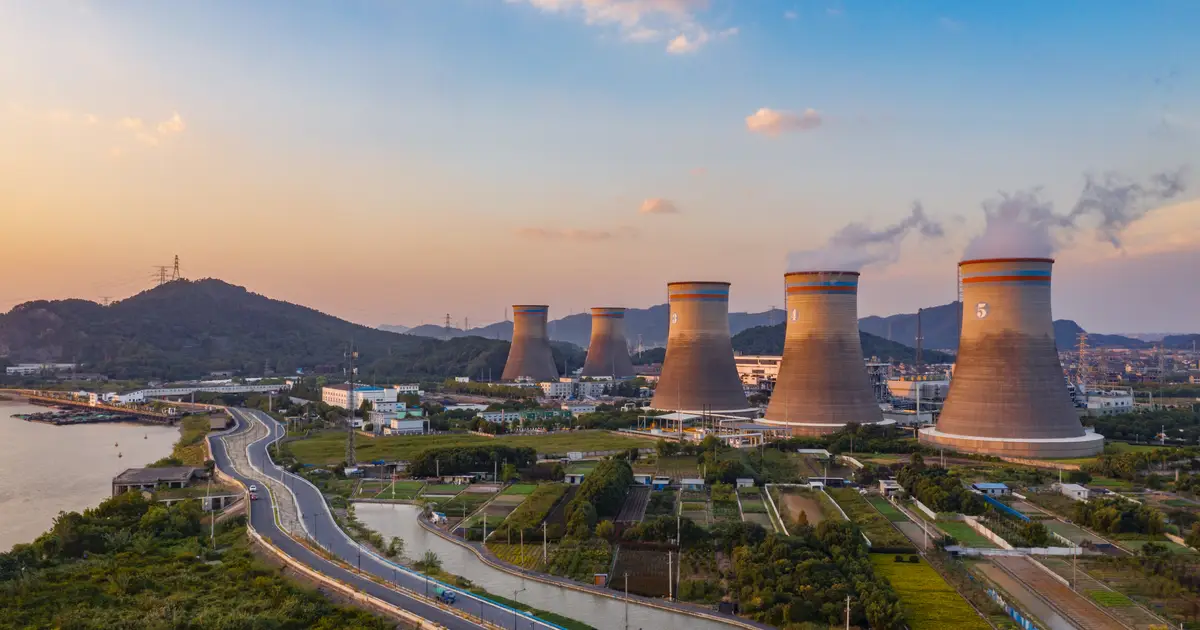
India's Waste-to-Energy Sector Ignites Investor Interest: A $6.97 Billion Bet and $1.97 Billion Market by 2034
Amidst tightening landfill capacities and a robust policy push, India's waste-to-energy sector is witnessing a surge in investor confidence, projected to grow to $1.97 billion by 2034, driven by significant capital commitments like Reliance Industrie
The Resurgence of Waste-to-Energy: A Strategic Imperative
The waste-to-energy (WtE) sector in India, long overshadowed by perceived complexities and nascent regulatory frameworks, is experiencing a profound renaissance, positioning itself as a compelling investment frontier for discerning finance professionals. This renewed interest is not merely speculative but grounded in a confluence of tightening urban waste management challenges, an urgent drive for energy security, and an evolving regulatory landscape designed to enhance project viability and attractiveness. For CFA candidates and ICAI students, understanding the financial mechanics and strategic implications of this sector is paramount, offering a glimpse into a nascent market with substantial growth potential.
Catalysts for Growth: Policy, Urbanization, and Energy Security
India's WtE sector is being propelled by several powerful macro and microeconomic forces. Urbanization has led to an acute crisis in landfill capacity across major metropolitan areas, necessitating innovative solutions for waste disposal. Simultaneously, the nation’s pursuit of energy security, particularly from renewable sources, has elevated WtE's strategic importance. The upcoming Solid Waste Management (SWM) Rules, 2026, are a pivotal policy instrument, promising to streamline waste segregation and improve project pipelines by providing greater predictability—a factor historically constraining project viability.
Guillaume Dourdin, Chief Executive and Managing Director of Indian arm of French waste management major Veolia, highlights that these regulatory changes are systematically addressing long-standing gaps, particularly concerning waste segregation and revenue predictability. This clarity is crucial for financial modeling and risk assessment, making projects more palatable for institutional investors.
India's WtE Market: A Data-Driven Outlook
The financial potential of India's WtE market is robust. Valued at an estimated $1.56 billion in 2025, it is projected to expand to $1.97 billion by 2034, reflecting a compound annual growth rate (CAGR) of 2.55%, according to IMARC Group. This growth trajectory, while appearing modest, belies the significant underlying investment and operational shifts. Globally, the WtE market is expected to grow from $37.29 billion in 2025 to $51.68 billion by 2034 at a CAGR of 3.62%, with Asia-Pacific accounting for a dominant 48.24% share in 2025, primarily driven by activity in India, China, and Japan.
The underlying demand-side pressures, particularly the exhaustion of landfill capacity in major cities, underscore the increasing necessity for WtE solutions. This fundamental need provides a stable long-term revenue outlook, a key consideration for infrastructure investors.
Strategic Capital Inflows and Key Players
The renewed investor appetite is evident in substantial capital commitments. Reliance Industries Ltd. has unveiled an ambitious plan to invest approximately $6.97 billion into 500 compressed biogas (CBG) plants in Andhra Pradesh over the next five years. This significant capital allocation from a domestic conglomerate signals strong confidence in the sector's potential and scalability.
Japanese engineering giant JFE Engineering Corp. has also entered the fray, partnering with Antony Waste Handling Cell to develop WtE plants in Andhra Pradesh, marking its inaugural investment in India. Akira Usui, Director, Recycling Business Promotion Division, Environmental Solutions Sector at JFE Engineering, emphasized their strategic intent, stating, “We are exploring more investments in this sector in big cities.”
Beyond these behemoths, the sector is attracting a diverse range of capital. Renewable energy firm SAEL, for instance, has successfully garnered $20 million in global capital from a Norwegian state fund for its agri-waste-to-energy plants, ahead of its planned initial public offering (IPO) in October. This demonstrates the liquidity and exit potential now emerging for financial sponsors.
Vaibhav Garg, Director, Infrastructure & Real Assets Investment Banking at Avendus Capital, notes that investor appetite has spiked due to a robust regulatory push, stronger net-zero commitments, and reduced volatility in global fuel and natural gas prices, all contributing to improved project economics.
Navigating Investment Dynamics: Risk, Return, and Due Diligence
Historically, private equity investors have largely shied away from the WtE sector due to its perceived long gestation periods and complexities. However, improving bankability and execution visibility, coupled with global capital interest, has fundamentally altered this perception. Equity internal rates of return (IRR) in WtE projects typically range in the high-teens, contingent upon specific project risks and dynamics. This makes it an attractive proposition for infrastructure funds and private equity firms seeking stable, long-term returns with a strong ESG overlay.
However, finance professionals must exercise rigorous due diligence. Key bottlenecks that still require attention include ensuring consistent feedstock quality, establishing robust power purchase agreements, and developing adequate infrastructure. These factors remain critical for de-risking projects and ensuring predictable cash flows. A convergence of policy push, structural needs, and global capital, alongside improved project bankability and execution visibility, is transforming what was once considered a high-risk sector into a viable investment opportunity.
Actionable Insights for Finance Professionals
1. Capital Allocation Strategy: Consider WtE as a distinct asset class within infrastructure portfolios. Given the stable demand drivers and increasing regulatory support, it offers a defensive hedge against economic cycles and aligns with growing ESG mandates. 2. Project Finance Specialization: Opportunities abound for specialists in structuring complex project finance deals. Emphasis should be placed on robust off-take agreements, feedstock supply chain management, and securing government incentives. 3. M&A and IPO Potential: The sector is ripe for consolidation. As smaller players demonstrate proof of concept, larger strategic investors or private equity funds may find attractive acquisition targets. SAEL’s upcoming IPO signals a maturing market where public listings become a viable exit strategy. 4. Risk Management: While improved, risks related to technology, operational efficiency, and regulatory changes (e.g., changes in waste classification or environmental standards) still necessitate careful assessment. Financial models should incorporate scenario analysis for these variables. 5. Sustainable Investing: WtE projects offer a tangible pathway to achieving both waste reduction and renewable energy targets, making them highly attractive for impact investors and funds with strong sustainability mandates.
Conclusion
The Indian waste-to-energy sector is at an inflection point. With substantial capital commitments, a supportive policy environment, and critical demand drivers, it presents a compelling investment case. While navigating the inherent complexities requires sophisticated financial acumen, the sector’s dual promise of environmental sustainability and robust financial returns positions it as a significant contributor to India’s green economy and a rewarding avenue for astute finance professionals.
Found this useful? Share it!
Interested in Finance Education?
Explore our CFA and investing courses — built for serious learners.
More from Krawl Insights

Unpacking Mr. Market's erratic behavior. From geopolitical tensions to surprising AI pivots.
GM's $2.8 Billion Korean Gambit: Navigating Tariffs, Labor Arbitrage, and Global Production Strategy