Reading this on Krawl? Register for free.
Unlock listen-aloud, reading history and personalised feeds — at zero cost.
Free registration unlocks the full Finance Desk
Private Equity's Conundrum: Exit Drought Challenges Valuation Narratives Amidst Market Headwinds
Private equity market is at a critical juncture, with record dry powder facing an exit drought and valuation mismatches. While some industry leaders express optimism for a rebound in the latter half of the year, the prevailing data points otherwise.
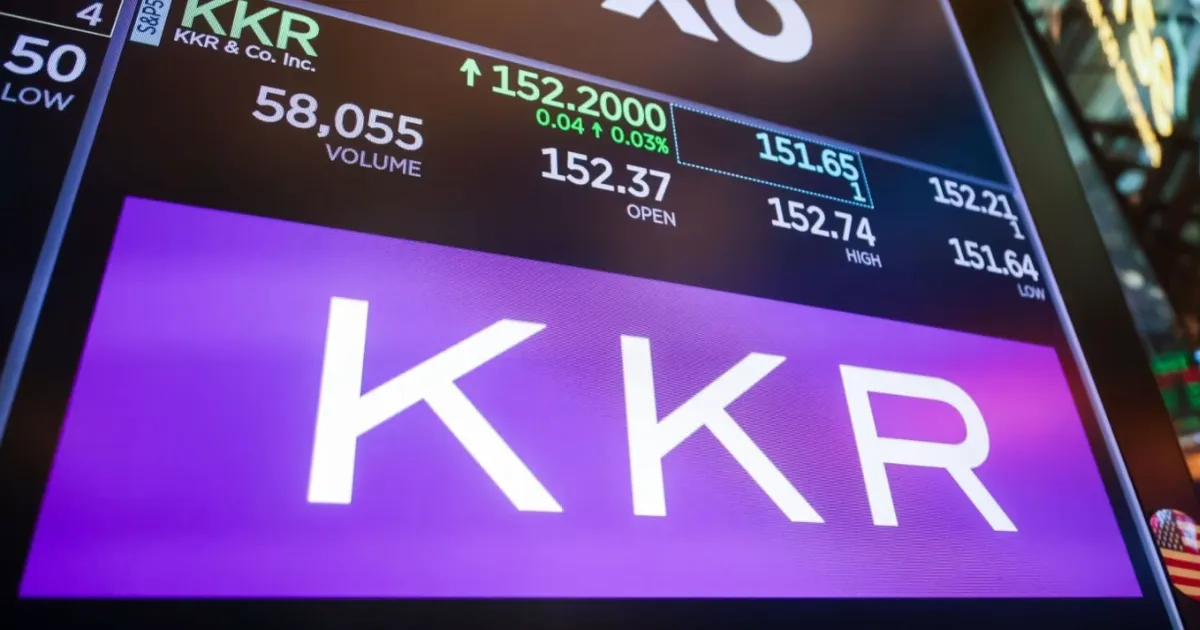
Despite a robust fundraising environment that has seen institutional investors commit substantial capital to private equity, the industry confronts a liquidity conundrum. This tension was recently highlighted by KKR's co-chief executive officer, Joe Bae, who described the current market as a "golden opportunity" for new private-equity deals, but cautioned against "untangling a global bottleneck of almost 33,000 portfolio companies waiting to be sold." This statement, delivered during an earnings call, underscores a widening divergence between capital inflows and exit mechanisms, pointing to potential structural issues beneath the surface of an otherwise resilient asset class.

The Consensus View: Navigating Market Turbulence
Many industry participants express a cautious optimism, acknowledging the challenging market conditions while anticipating a rebound in exits. Martin Escobari, co-president of General Atlantic, described the period as a "winter of exits" but suggested that "spring has arrived." Similarly, TPG president Todd Sisisky noted that while "re-rent exits happened at premiums to our marks," still, market conditions could affect the timing of future investment sales. Pete Stavros, KKR's global co-head of private equity, echoed this sentiment, believing that 2026 is a more realistic year for private-equity exits. These views collectively suggest that while the immediate future remains complex, the underlying strength of the private equity model will prevail once macro-economic headwinds subside, allowing for a return to historical exit patterns and valuations.
The Analytical Case: Prolonged Holds and Valuation Gaps
However, an examination of the data reveals a more entrenched challenge than mere cyclicality. The volume of US private-equity portfolio companies has steadily increased, reaching 13,325 in 2022 and continuing to rise, indicating a significant accumulation of unrealized assets. Concurrently, US private-equity exit value has experienced a notable decline, dropping to USD 144.4 billion in the fourth quarter of 2023, a substantial decrease from the USD 221.7 billion recorded in the prior-year period. This decline in exits, despite substantial dry powder, suggests that the market is not simply waiting for better conditions, but struggling with fundamental valuation discrepancies and a reluctance to accept lower prices. Further, a significant portion of portfolio companies—nearly half—have been held for over four years, with some estimates suggesting that the average holding period for exits could be longer than the historical average. This extended holding period, coupled with the continued growth in portfolio company count, amplifies the risk of asset staleness and potential pressure on managers to monetize investments at less favorable valuations.
The Non-Obvious Read: Structural Illiquidity and the Mark-to-Market Resistance
The core issue lies not just in market timing but in a structural illiquidity exacerbated by the resistance to mark-to-market adjustments. Industry executives have openly acknowledged that valuations remain a sticking point. Fund distributions as a percentage of net asset value have been below 15% for four years, a clear indication that capital is not flowing back to limited partners at historical rates. This reluctance to adjust valuations downwards, even in the face of macro uncertainty and higher interest rates, creates a bid-ask spread that stifles exit activity. The pile-up of unsold investments—estimated at 33,000 global companies—points to an environment where general partners are holding onto assets longer, hoping for a market recovery rather than realizing returns at current, potentially lower, valuations. This dynamic could lead to a 'denominator effect' for limited partners, affecting their ability to commit to future funds and potentially creating a longer-term drag on private equity's perceived liquidity premium.
The Position
The confluence of declining exit values, increasing holding periods, and widespread resistance to valuation adjustments suggests that the private equity market is facing more than a cyclical downturn. This situation points to a structural challenge where the historical exit mechanisms are under strain, potentially leading to prolonged capital lock-ups for investors and increased pressure on managers to demonstrate realized returns in a less forgiving market environment.
Found this useful? Share it!
Interested in Finance Education?
Explore our CFA and investing courses — built for serious learners.