Reading this on Krawl? Register for free.
Unlock listen-aloud, reading history and personalised feeds — at zero cost.
Free registration unlocks the full Finance Desk
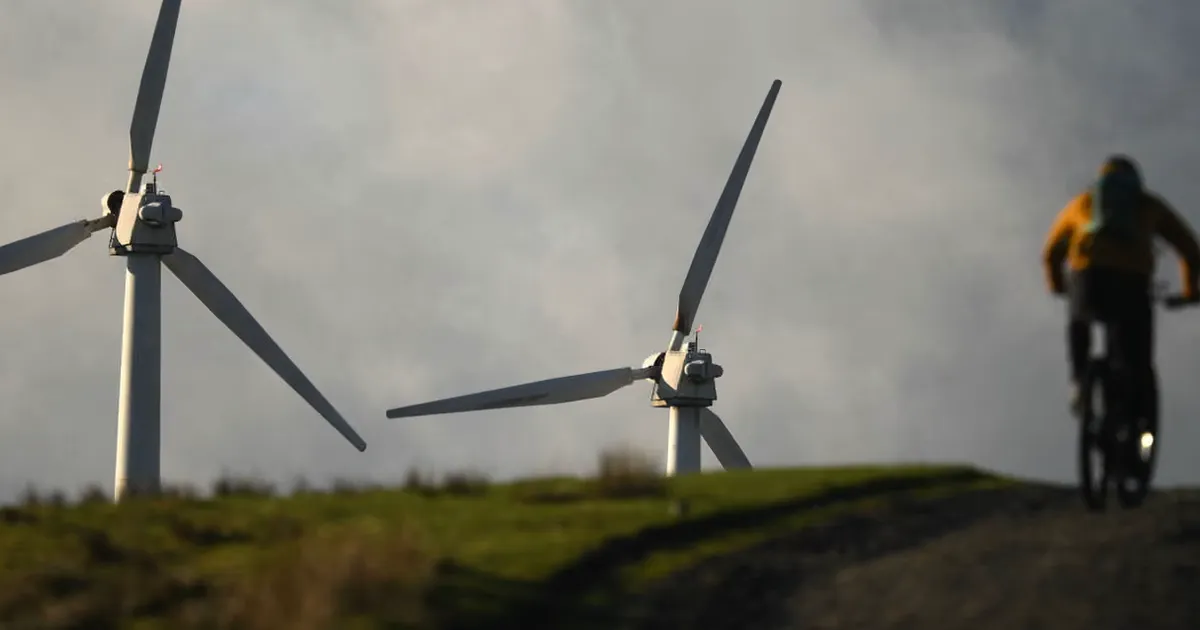
Renewable Energy: Wales's Cambrian Mountains Face Industrial Transformation
Britain's push for renewable energy targets the Cambrian mountains with proposals for over 100 massive wind turbines, each rising up to 755 feet—threatening Wales's most precious wilderness.
The global pursuit of renewable energy has reached a critical crossroads in mid-Wales, where ambition and environmental preservation are locked in a profound conflict. As nations worldwide grapple with climate change, the question isn't whether to transition to clean energy, but at what cost to our most treasured landscapes.
The Forgotten Wilderness of Britain
The Cambrian mountains represent a historical oversight with contemporary consequences. Spanning nearly 500 square miles of untamed mountain and moorland, this region stands as Britain's wildest landscape south of Scotland's Highlands. In the 1950s, when Britain designated its national parks, Wales received Eryri (Snowdonia), the Pembrokeshire coast, and the Brecon Beacons. The Cambrians—larger and grander than the Beacons—were deemed too inaccessible and overlooked.
This seven-decade-old omission has left the region vulnerable. Stretching from the heights of Plynlimon to the Pembroke border in the south, the Cambrians remain virtually devoid of habitation or roads. What makes them extraordinary is precisely what has kept them unprotected: their remoteness and the sparse population unable to advocate effectively for their preservation.
The Scale of Industrial Transformation
Energy Minister Ed Miliband's lifting of the onshore wind turbine ban has triggered an avalanche of development proposals that would fundamentally alter this wilderness. Through coordination with the Welsh government, private companies have proposed installing more than 100 wind turbines across the Cambrian landscape.
Engineering Giants on Ancient Hills
The scale of these structures defies traditional rural development. Some proposed turbines would rise between 720 to 755 feet—50% taller than any currently operating in England and Wales, and more than double the height of Big Ben. These aren't merely tall structures; they're industrial installations requiring massive supporting infrastructure.
According to the Wild Wales Trust, each turbine demands excavation of an enormous pit filled with approximately 2,200 tons of concrete foundation. The turbine itself consumes at least 110 tons of steel. This construction would necessitate an extensive network of access roads, repair facilities, and storage warehouses—transforming pristine wilderness into an industrial zone.
Additionally, developers propose over 125 miles of pylons to connect these installations to the National Grid. The carbon footprint of this construction presents its own environmental paradox, particularly given that wind turbines have an estimated operational life of only 20 to 25 years before requiring replacement.
Environmental and Cultural Costs
The ecological implications extend beyond visual impact. The Wild Wales Trust has warned that these projects would "degrade and industrialise huge areas of the uplands and valleys." Several proposed sites would encroach upon Wales's only UNESCO biosphere in the Dyfi valley, potentially compromising an internationally recognized ecosystem.
Specific Threatened Locations
The exquisite Glaslyn uplands face particularly acute threat. Plans call for 26 turbines, each 720 feet high, creating a hilltop industrial estate visible from across Wales. Nearby, the Artists Valley—a beauty spot that has inspired generations of painters and photographers—would be crowned by 37 similar turbines, fundamentally altering its character.
Local resistance has emerged, though hampered by the region's sparse population. Hand-drawn notices pleading for reprieve blow in the wind across the uplands—a poignant contrast to the massive corporate development plans they oppose.
The Political Paradox
The Campaign for the Protection of Rural Wales strongly opposes the project, yet finds itself in a difficult position. Even the Welsh Greens appear conflicted, constrained by environmental ideology that treats wind power as inherently sacred, regardless of location or impact.
Energy for Export, Not Local Need
Perhaps most controversially, these turbines aren't necessary for Welsh energy requirements. Wales is progressing toward renewable self-sufficiency and currently operates as a net energy exporter. These installations would primarily supply power to the rest of the UK—echoing the contentious 1960s saga when Welsh valleys were flooded to provide Liverpool with water.
This dynamic raises fundamental questions about regional autonomy and environmental justice. Should Wales sacrifice its most precious wilderness to meet England's energy targets?
The National Park That Never Was
Had the Cambrians received national park designation in the 1950s, such proposals would be unthinkable. The region's vulnerability stems partly from historical opposition by local farmers to park designation and partly from what critics describe as Wales's political immunity to its own visual beauty.
This situation illuminates a broader challenge facing renewable energy development globally: the tension between climate goals and landscape preservation. Both are environmental priorities, yet here they stand in direct opposition.
Finding Balance in the Energy Transition
The Cambrian controversy forces us to confront uncomfortable truths about the energy transition. Yes, the world is getting hotter. Yes, Britain should produce more renewable energy. But wind turbines can be located anywhere the wind blows adequately. To situate over 100 massive industrial installations across Britain's wildest accessible landscape represents not necessity but convenience—and perhaps political ambition.
The question isn't whether to build renewable energy infrastructure, but where and how. Alternative locations with less ecological and visual impact exist. Offshore wind, rooftop solar, and previously developed land offer pathways that don't require sacrificing irreplaceable wilderness.
For aspiring finance and sustainability professionals, this controversy offers crucial lessons in stakeholder analysis, environmental economics, and the complex trade-offs inherent in ESG decision-making. The cheapest solution isn't always the wisest; true sustainability requires balancing multiple environmental values, not privileging one at the expense of all others.
The Cambrian mountains have survived for millennia. The decisions made in coming months will determine whether they survive the renewable energy revolution—or become a cautionary tale of how climate solutions can create environmental casualties of their own.
Found this useful? Share it!
Interested in Finance Education?
Explore our CFA and investing courses — built for serious learners.
More from Krawl Insights

Unpacking Mr. Market's erratic behavior. From geopolitical tensions to surprising AI pivots.
GM's $2.8 Billion Korean Gambit: Navigating Tariffs, Labor Arbitrage, and Global Production Strategy