Reading this on Krawl? Register for free.
Unlock listen-aloud, reading history and personalised feeds — at zero cost.
Free registration unlocks the full Finance Desk
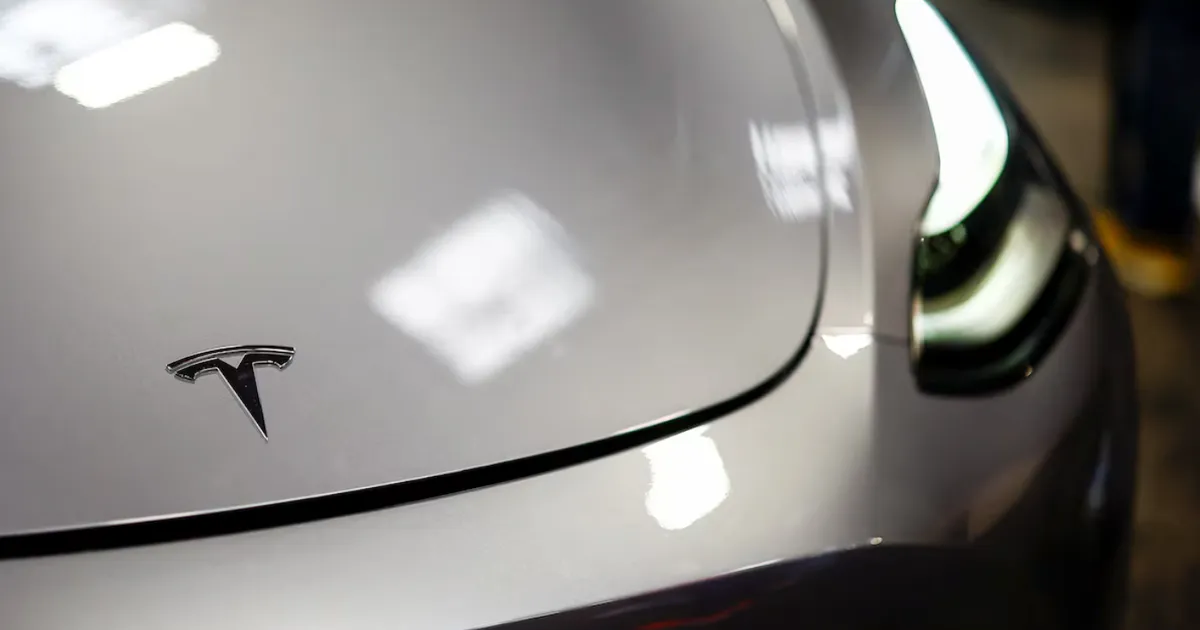
Tesla's Discount Dilemma: Why 2026 Could Bring a Market Reality Check
An analytical deep-dive into Tesla's valuation challenges, exploring why the EV giant's premium pricing power may face unprecedented pressure in the coming years.
Tesla has long traded at a premium that defies conventional automotive industry metrics. While traditional carmakers trade at single-digit P/E ratios, Tesla has commanded multiples that place it in the realm of high-growth technology companies. But as we approach 2026, several structural headwinds suggest this valuation disparity may no longer be sustainable.
The Vanishing First-Mover Advantage
Tesla's extraordinary valuation has historically been justified by its pioneering position in electric vehicles. However, the competitive landscape has transformed dramatically. Legacy automakers have collectively invested over $500 billion in electrification strategies, while Chinese manufacturers like BYD have not only matched Tesla's production volumes but have begun to exceed them in certain markets.
The first-mover advantage that once seemed insurmountable is eroding at an accelerating pace. When competitors offer comparable technology at lower price points, the premium that consumers are willing to pay for the Tesla brand inevitably compresses. This isn't speculation—it's basic market economics.
Margin Compression: The Inevitable Consequence
Tesla's gross margins, which peaked above 25% in recent years, have already shown signs of deterioration. The company has implemented multiple price cuts across its product lineup, a clear signal that demand elasticity is becoming a constraint. For a company whose valuation depends on maintaining both volume growth and premium pricing, this creates a fundamental tension.
From a financial analysis perspective, margin compression in a maturing industry is not anomalous—it's typical. As products commoditize, differentiation becomes harder to maintain, and pricing power diminishes. Tesla is not immune to these market forces, regardless of how transformative its technology may be.
The Autonomous Driving Promise: Still Unfulfilled
A significant portion of Tesla's valuation premium rests on the promise of full self-driving capability and the potential robotaxi network. Yet, despite years of predictions, regulatory approval for autonomous commercial operations remains elusive. The technological challenges have proven more complex than initially anticipated, and the regulatory framework remains nascent.
For investors conducting fundamental analysis, the question becomes: how long can future promises justify present valuations? At some point, the market demands tangible revenue streams rather than aspirational business models. That inflection point may be approaching.
Financial Metrics Point Toward Normalization
Consider the arithmetic: if Tesla trades at 60 times earnings while Ford trades at 6 times earnings, the implicit assumption is that Tesla will grow into this valuation through exponential expansion. But with automotive markets facing saturation in developed economies and increasing competition globally, sustaining the growth rates required to justify current multiples becomes increasingly challenging.
The DCF models that once projected limitless growth trajectories are being recalibrated with more conservative assumptions. As these models incorporate realistic market share scenarios and margin compression, intrinsic valuations converge toward levels that imply significant downside from current trading prices.
The Macro Environment Compounds Challenges
Rising interest rates have already begun to reset valuations across growth sectors. High-multiple stocks are particularly vulnerable in this environment because their valuations are heavily dependent on distant future cash flows, which are worth less in present value terms when discount rates rise.
Additionally, as capital becomes more expensive, the competitive dynamics shift. Tesla's ability to outspend competitors on R&D and capacity expansion—a key advantage during the zero-interest-rate era—becomes constrained when capital costs rise for everyone, but especially for companies that still require significant investment to achieve their stated ambitions.
What This Means for Investors
For those approaching Tesla from a traditional valuation framework, the writing on the wall suggests a convergence toward automotive industry norms. This doesn't mean Tesla is without value—it means the company may need to be valued more like Toyota with a technology premium, rather than like a pure software company that happens to make cars.
The potential 2026 reality check isn't about Tesla failing as a business. It's about valuations aligning with fundamentals. For a company generating approximately $100 billion in revenue, even a generous automotive multiple implies a market capitalization substantially below current levels.
The Bottom Line
Tesla revolutionized the automotive industry and accelerated the global transition to electric vehicles. This achievement is undeniable and historically significant. However, investment returns are determined by the price you pay relative to the value you receive. At current valuations, Tesla incorporates optimistic assumptions across multiple dimensions: market share, margins, autonomous technology deployment, and new business line contributions.
As we progress toward 2026, the market may increasingly demand evidence rather than promise. For investors, this suggests a period of valuation recalibration that could prove painful for those who entered positions at premium multiples. The discount that once seemed impossible may become the new reality as Tesla transitions from a growth story to a mature, albeit technologically advanced, automotive manufacturer.
Understanding these dynamics is crucial for anyone conducting serious financial analysis. Markets eventually revert to fundamental valuations—the only question is timing and magnitude. For Tesla, that day of reckoning may be closer than many investors anticipate.
Found this useful? Share it!
Interested in Finance Education?
Explore our CFA and investing courses — built for serious learners.
More from Krawl Insights
Unpacking Mr. Market's erratic behavior. From geopolitical tensions to surprising AI pivots.
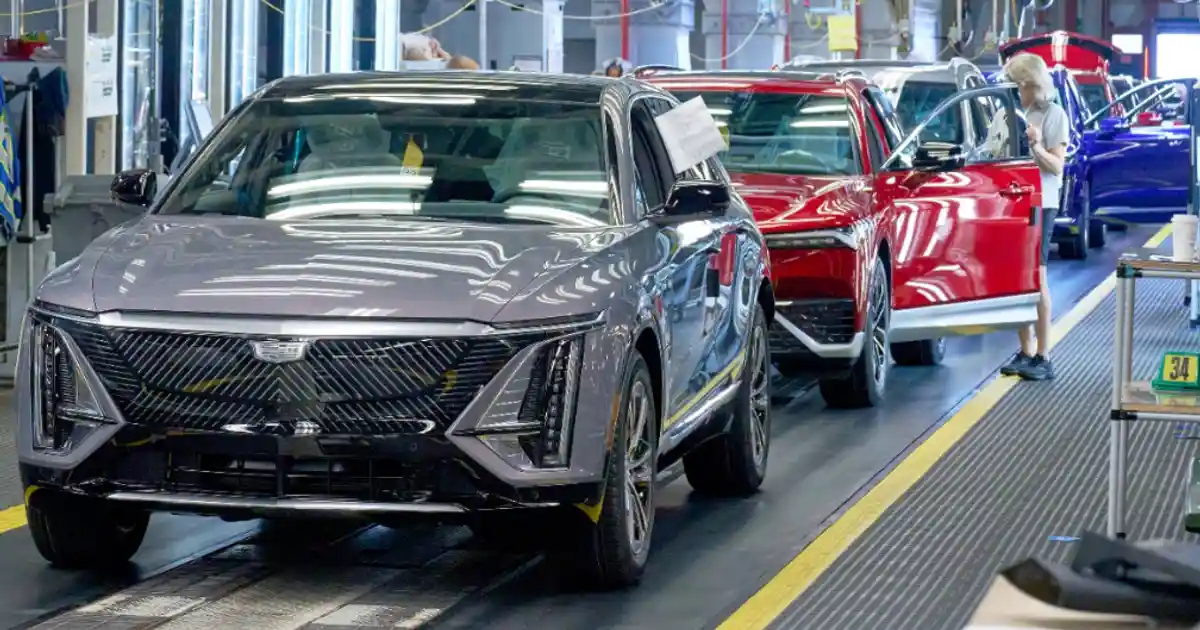
GM's $2.8 Billion Korean Gambit: Navigating Tariffs, Labor Arbitrage, and Global Production Strategy