Reading this on Krawl? Register for free.
Unlock listen-aloud, reading history and personalised feeds — at zero cost.
Free registration unlocks the full Finance Desk
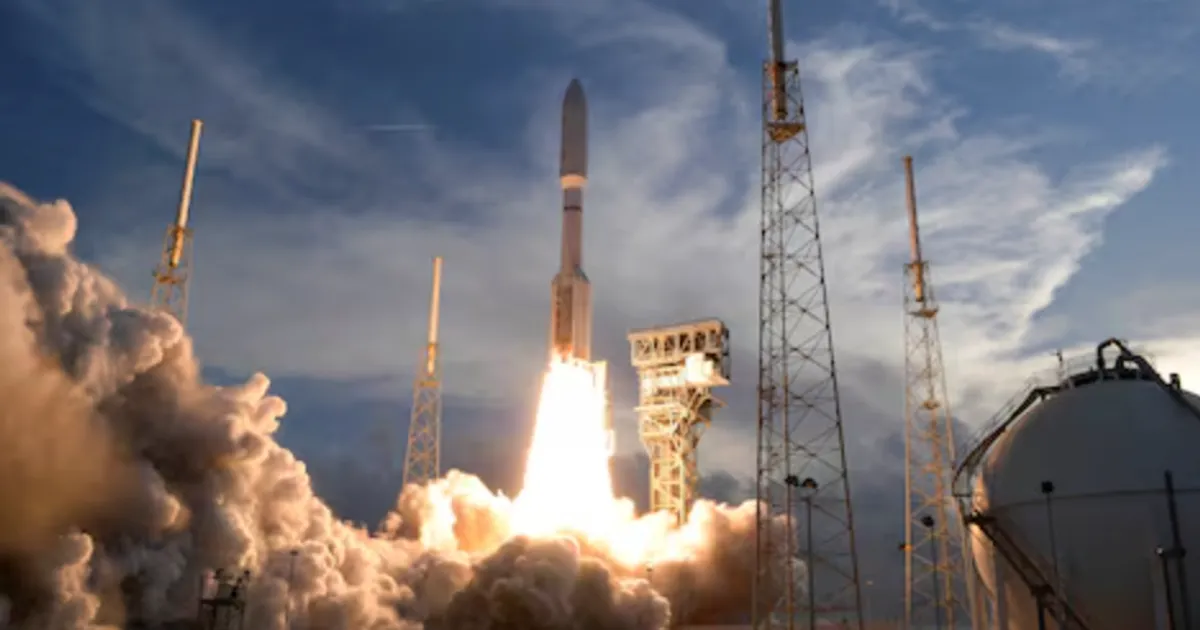
The $11 Billion Satellite Frontier: Capital Allocation in the Bezos-Musk Orbital Arena
The Bezos-Musk space race intensifies, driven by multi-billion dollar investments in satellite internet, launch vehicles, and lunar missions. This analysis for finance professionals dissects Amazon's $11 billion Globalstar deal.
The Bezos-Musk Orbital Arena: A New Era of Capital Allocation
In the vast expanse of the cosmos, a terrestrial battle of titans is unfolding, one that demands the keen attention of finance professionals globally. Jeff Bezos’s Amazon and Elon Musk’s SpaceX are locked in an escalating rivalry, pushing the boundaries of technology and, crucially, redefining the landscape of strategic capital allocation. This isn't just about rockets; it's a multi-billion dollar contest to dominate future connectivity, data infrastructure, and resource extraction, profoundly impacting investment strategies and market valuations.
The recent announcement of Amazon’s $11 billion deal with satellite operator Globalstar, aimed at bolstering its Project Kuiper satellite internet business, underscores the immense financial stakes. This transaction, occurring as Bezos's Blue Origin ramps up its launch capabilities with the New Glenn rocket, pits Amazon directly against Musk’s SpaceX, which continues to expand its Starlink constellation and develop its formidable Starship system. For CFA candidates and seasoned finance professionals, this arena offers invaluable lessons in market disruption, long-term strategic planning, and the intricate dance between innovation and financial viability.
The New Space Race: Beyond Launch Vehicles
Strategic Investments and Market Dynamics
The space race of today is fundamentally different from its Cold War predecessor. While national prestige remains a factor, the primary drivers are commercial dominance and technological leadership in lucrative sectors. Amazon's $11 billion investment in Globalstar is a clear signal of intent: to accelerate its Project Kuiper's reach and competitiveness. This move is not merely about launching satellites; it's about securing bandwidth, extending terrestrial networks into orbit, and capturing a significant share of the global broadband market.
Musk’s SpaceX, with its existing Starlink network, holds a considerable first-mover advantage, already serving millions of customers. Its strategy involves mass production and rapid deployment of satellites, leveraging the reusability of its Falcon 9 rockets and the anticipated capabilities of Starship. Blue Origin, while perhaps slower to market, aims for heavy-lift capability and lunar missions, positioning itself for long-term governmental and commercial contracts, including NASA’s Artemis program. These contrasting approaches highlight different capital expenditure profiles and risk appetites, critical considerations for any financial analysis.
For investors, evaluating these ventures requires looking beyond traditional metrics. The long lead times for R&D, the significant upfront capital required for infrastructure, and the regulatory complexities create unique challenges. The potential for exponential growth in areas like global internet access, space tourism, and in-orbit manufacturing, however, offers compelling returns for those willing to navigate the high-risk, high-reward environment.
Vertical Integration and Supply Chain Optimization
Both Amazon and SpaceX are pursuing aggressive vertical integration strategies, a common theme in high-growth, capital-intensive industries. SpaceX designs and manufactures its rockets, satellites, and ground infrastructure in-house, enabling tighter control over costs, quality, and development cycles. This control is crucial for maintaining its rapid launch cadence and competitive pricing. The acquisition of Globalstar assets by Amazon allows it similar control over key aspects of its satellite broadband delivery, complementing its own satellite manufacturing efforts for Project Kuiper.
This vertical integration extends to the entire value chain, from component manufacturing to customer service. For finance professionals, analyzing these models involves assessing the efficiency of internal supply chains, the impact of R&D investments on long-term profitability, and the ability to scale operations rapidly. The goal is not just to build rockets, but to create sustainable ecosystems that generate recurring revenue streams, much like Amazon’s terrestrial e-commerce and cloud computing empire.
Catalysts for Growth: Government Contracts and Emerging Markets
NASA's Influence and Public-Private Partnerships
Government contracts, particularly from NASA, serve as a significant catalyst and de-risking factor for these space ventures. NASA’s Artemis program, aimed at returning humans to the Moon and eventually Mars, provides a stable stream of funding and an endorsement of technological prowess. SpaceX has already secured critical contracts, and Blue Origin is vying for similar opportunities. These partnerships are not just about revenue; they validate technology, attract talent, and open doors to further commercial applications.
The shift towards public-private partnerships allows NASA to leverage the innovation and efficiency of private companies, while providing these companies with foundational support. This model is crucial for accelerating development in areas that might otherwise be too costly or risky for purely private investment. Financial analysis must therefore include the impact of government procurement cycles, long-term contract visibility, and the political landscape on projected revenues and cash flows.
Untapped Potentials: Data Centers, AI in Space, and Global Connectivity
Beyond broadband, the next frontier for space commercialization includes in-orbit data centers, AI computing payloads, and enhanced earth observation. The article hints at this, mentioning the demand for specialized data centers and the ability to process AI computing payloads in orbit. This represents a significant new market for infrastructure providers and data service companies.
Moreover, the demand for truly global connectivity remains immense, especially in underserved regions. Companies like AST SpaceMobile, working with terrestrial partners, are developing capabilities to connect standard smartphones directly to satellites. While these projects involve complex technological hurdles and significant capital outlay, their potential market is vast. The ability to connect billions of unserved or underserved individuals represents a massive addressable market for these companies, promising substantial returns for early investors who understand the technological and market risks.
Financial Implications for CFA Candidates and Investors
Risk vs. Reward in High-Growth Sectors
Investing in the space sector is inherently a long-term play characterized by high risk and potentially high reward. The capital requirements are staggering, the technological challenges formidable, and the regulatory environment constantly evolving. For finance professionals, assessing these companies requires a nuanced approach, moving beyond traditional P/E ratios and focusing on metrics like burn rate, funding rounds, strategic partnerships, and long-term competitive advantages.
Understanding the interplay between innovation and financing, the cost of failure, and the intellectual property moats being built is paramount. The current competitive landscape suggests that only well-capitalized entities with visionary leadership can sustain the marathon of space development. Therefore, a deep dive into the financial health, funding sources, and cash flow projections is essential for any investment decision.
Valuing the Unseen: Challenges in Nascent Space Companies
Valuing companies in nascent sectors like commercial space presents unique challenges. Traditional valuation methodologies may fall short when estimating future cash flows from services that are still in early development or have yet to reach full market adoption. Discounted Cash Flow (DCF) models need to incorporate highly speculative growth rates and terminal values, sensitive to assumptions about technological breakthroughs and market penetration.
Comparative analysis is also difficult due to the limited number of truly comparable public companies. Instead, investors might rely on venture capital funding rounds as indicators of private market valuations or use sum-of-the-parts analysis, dissecting the value of launch services, satellite internet, and other segments. For finance professionals, the challenge lies in translating ambitious technological roadmaps into defendable financial projections and identifying the key drivers of long-term value creation in this uncharted territory.
Conclusion: Charting the Course for Future Returns
The Bezos-Musk space race is more than a contest of egos; it's a crucible for advanced engineering, bold strategic investments, and the future of global connectivity. For finance professionals, it offers a compelling case study in analyzing high-growth, capital-intensive industries undergoing profound disruption. The $11 billion commitment by Amazon for Project Kuiper highlights the immense financial muscle being deployed to secure orbital dominance. As these companies push the boundaries of what's possible, they are simultaneously creating new asset classes, opening up unprecedented investment opportunities, and shaping the future of global commerce and communication. Understanding the underlying financial strategies, the risks involved, and the potential for transformative returns will be critical for those seeking to navigate this exciting new frontier.
Found this useful? Share it!
Interested in Finance Education?
Explore our CFA and investing courses — built for serious learners.
More from Krawl Insights

Unpacking Mr. Market's erratic behavior. From geopolitical tensions to surprising AI pivots.
GM's $2.8 Billion Korean Gambit: Navigating Tariffs, Labor Arbitrage, and Global Production Strategy