Reading this on Krawl? Register for free.
Unlock listen-aloud, reading history and personalised feeds — at zero cost.
Free registration unlocks the full Finance Desk
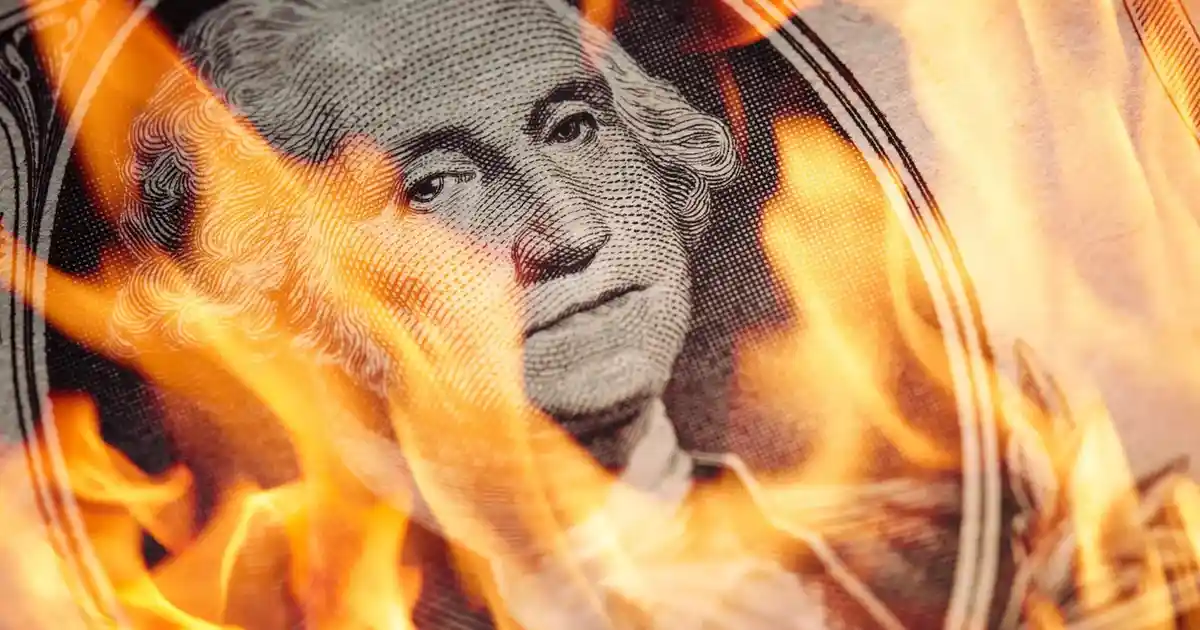
The Dollar Is Still Alive: What It Means for Global Finance
The US dollar's dominance faces challenges from yuan and gold reserves, yet structural advantages keep it alive. Understanding this shift is crucial for finance professionals navigating global markets.
The death of the US dollar has been predicted countless times, yet it remains the world's primary reserve currency. As geopolitical tensions reshape global financial plumbing, finance professionals must understand the nuanced reality: de-dollarisation is struggling, but the dollar's dominance is indeed being challenged.
The Strait of Hormuz: Where Geopolitics Meets Currency
The Strait of Hormuz has emerged as the epicenter of geopolitics in 2026, with Iran's military posturing creating ripples across global financial markets. Every time tensions escalate, the world watches nervously as this critical shipping route—through which much of the world's oil passes—becomes a potential flashpoint.
This week, a new development emerged that signals deeper shifts in global finance. Iran has initiated a payment system for ships wishing to pass through the strait, offering two options: pay $2 million in Chinese yuan, or pay $2 million in cryptocurrency. As of this reporting, barely a dozen ships have passed through under this system, with no record yet of money collected in yuan or cryptocurrencies.
This development, however symbolic, represents the broader trend of countries seeking alternatives to dollar-denominated transactions—even if implementation remains challenging.
The Petrodollar System: Foundation of Dollar Dominance
To understand today's shifts, we must revisit July 20, 1974. William Simon, a Wall Street bond trader turned US Treasury Secretary, met King Faisal at his summer palace in Taif, Saudi Arabia. Simon also met with Prince Fahd bin Abdulaziz, Finance Minister Mohammed bin Ali Aba Al Khail, and legendary Oil Minister Ahmed Zaki Yamani to operationalize an idea wrapped as economic cooperation for the world.
The deal was elegant in its simplicity: every barrel of Saudi crude would be anchored in US dollars, and in exchange, the US government would offer a security guarantee to the Saudi regime. This quid pro quo created what became known as the petrodollar system.
Smart geopolitics was scaffolded by smart economics—global demand for oil and global pricing in dollars entrenched the domination of the dollar. Five decades later, the ideas of domination by denomination and global currency are losing their sheen.
The Petro-Yuan Challenge
Geopolitics is redesigning global financial plumbing, and China sits at the center of this transformation. As the second-largest consumer of crude oil at 16.8 million barrels per day, China imports the bulk of its energy via the Strait of Hormuz. Crucially, China pays for oil from Iran and Saudi Arabia in yuan, not dollars.
Russia's trade with China is adjusted in yuan, while its trade with India often occurs in rupees. The petrodollar's sphere of influence is being challenged by the petro-yuan—a fundamental shift in how energy markets operate.
This structural shift in payments is fueling another visible shift: how countries are parking their foreign exchange reserves.
The Reserve Currency Reallocation
The data reveals a striking trend. In 2001, over 72% of the forex reserves of central banks were parked in US dollars. By 2026, this figure has declined to just 56.7%—the lowest level in 30 years.
Since 2022, central banks—especially of India and China—have been on a gold-buying spree. Gold has overtaken US treasury bonds as the largest reserve asset held by central banks. Rising gold prices have boosted both valuation and purchases, with central banks accumulating about 1,000 tonnes of gold per year.
The average dollar share of reserves slid 12% thanks to these gold purchases. Countries are also repatriating gold parked elsewhere—France, for instance, repatriated over 129 tonnes from New York to Paris.
India's De-Dollarisation Strategy
India has been actively participating in this trend. The country was among those cashing out of US treasuries, with holdings sliding 26% from a peak of $247 billion to a five-year low in January.
This triggered immediate diplomatic reactions. Soon after his appointment, US Ambassador Sergio Gor met with RBI Governor Sanjay Malhotra. While the aim remains unstated, the expansion of the 'quit dollar' movement makes the purpose clear. A few weeks later, Malhotra clarified that India was not selling US treasuries.
For India, paying in local currency trims imported inflation—a significant benefit given the country's large import bill. Countries are building a gated community of trades that ring-fences the impact of the dollar's ups and downs.
Why De-Dollarisation Keeps Failing
Despite these moves, dollarisation has survived, thanks to its scale and the complexity of geopolitics. Several factors explain this resilience:
Geopolitical Fragmentation
Those opposed to the dollar are opposed to others. The BRICS currency initiative needs both China and India on the same page—a difficult proposition given their geopolitical tensions and economic competition.
Lack of Viable Alternatives
The desire for a global currency is daunted by scale. The military and economic might of the US has enshrined the dollar as a haven. Other currencies—the yen, won, euro, and now the yuan—haven't measured up as they lack the stature and depth in markets.
Network Effects
The US has borne the burden of global leadership, providing liquidity and stability that others have not. Decades of infrastructure, from SWIFT payment systems to deep treasury markets, create enormous switching costs.
The Conceptual History of Global Currency
The aspiration for a global currency isn't new. John Maynard Keynes and Ernst F Schumacher conceptualized the idea of a global currency—Bancor—in 1942. The world has nursed this aspiration for over eight decades.
The desire has only intensified since the return of protectionist policies and the advent of what some call 'Trumponomics.' Stephen Miran, now a governor at the US Federal Reserve, mooted the Mar-a-Lago Accord that envisaged debasement of the dollar and tariffs to reduce debt.
Yet despite these challenges, the dollar's "exorbitant privilege"—as Charles de Gaulle called it—persists. Brazil's President Lula da Silva captured the frustration: "Every night I ask myself why all countries have to base their trade on the dollar?"
What This Means for Finance Professionals
For CFA candidates and finance professionals, several lessons emerge from this ongoing transition:
- Currency risk management becomes increasingly complex as bilateral trade arrangements proliferate
- Reserve management strategies are evolving, with gold playing a larger role alongside traditional forex reserves
- Geopolitical analysis is now essential for understanding currency markets and capital flows
- Diversification strategies must account for a multipolar currency world, even if the dollar remains dominant
The Bottom Line
The death of the dollar has always been an exaggeration wrapped in hope. While de-dollarisation faces structural hurdles that may prove insurmountable, the dollar's share of global reserves is undeniably declining. The world is moving toward a multipolar currency system, even if slowly.
For finance professionals, the key insight is this: the dollar isn't dying, but its monopoly is ending. Understanding how to navigate this transition—with its implications for trade finance, reserve management, and investment strategy—will be crucial in the years ahead.
The smart money isn't betting on the dollar's demise, but on learning to operate in a world where the dollar is first among several, rather than the only game in town.
Found this useful? Share it!
Interested in Finance Education?
Explore our CFA and investing courses — built for serious learners.
More from Krawl Insights

Unpacking Mr. Market's erratic behavior. From geopolitical tensions to surprising AI pivots.
GM's $2.8 Billion Korean Gambit: Navigating Tariffs, Labor Arbitrage, and Global Production Strategy