Reading this on Krawl? Register for free.
Unlock listen-aloud, reading history and personalised feeds — at zero cost.
Free registration unlocks the full Finance Desk
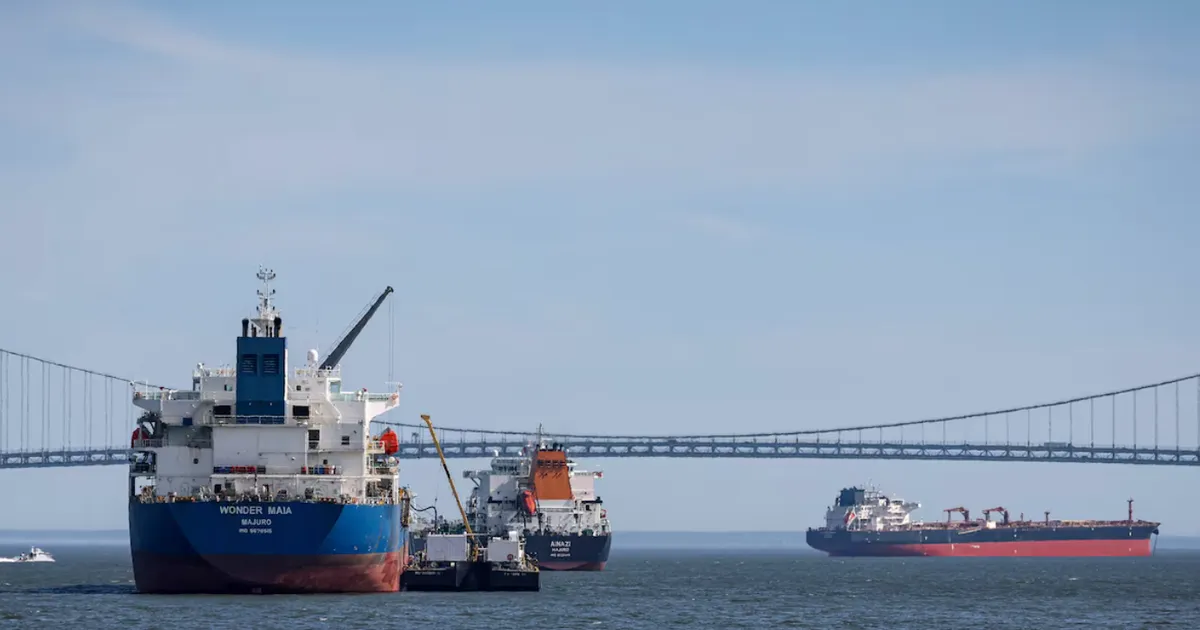
U.S. Crude's Unprecedented Shift: Navigating the $20.69 Arbitrage and a Near 6 Million BPD Capacity Wall
Geopolitical tremors in the Middle East have pushed U.S. crude exports to 5.2 million barrels per day, nearing historic net exporter status. Driven by a significant $20.69 Brent premium, this surge challenges existing infrastructure.
A New Era for U.S. Crude: $20.69 Premium Reshapes Global Flows
The global energy landscape is undergoing a monumental transformation, driven by geopolitical instability and shifting supply dynamics. Last week, the United States stood on the precipice of a historic milestone: becoming a net crude exporter for the first time since World War Two. This near-achievement, marked by net imports narrowing to an unprecedented 66,000 barrels per day (bpd) and exports surging to a seven-month high of 5.2 million bpd, signals a profound re-alignment of global energy flows.
For CFA candidates and finance professionals, this isn't merely a headline; it represents a critical case study in market arbitrage, supply chain resilience, and the intricate interplay of geopolitics and commodity prices. The underlying drivers – most notably, the significant $20.69 USD per barrel premium of Brent crude over U.S. West Texas Intermediate (WTI) – are creating compelling opportunities and challenges across the energy sector and beyond.
Geopolitical Catalysts and Supply Chain Re-alignment
The Strait of Hormuz Chokepoint and its $150 USD/Barrel Ripple
The primary catalyst for this dramatic shift originates from the Middle East, where conflict involving the U.S., Israel, and Iran has triggered the largest disruption to the global energy market in recent memory. Iranian threats to shipping in the Strait of Hormuz, a vital waterway through which approximately one-fifth of the world's oil and gas supplies transit, effectively choked off a significant portion of global energy traffic. This immediate supply shock sent refiners in Asia and Europe scrambling for alternatives.
The ripple effect was immediate and severe. The price of physical crude oil cargoes for prompt delivery to Europe surged to nearly $150 USD per barrel on Monday, with African benchmarks also reaching new peaks. This desperate demand, combined with the U.S.'s expanding production capabilities, positioned American crude as a crucial, albeit geographically distant, lifeline.
The Arbitrage Advantage: WTI vs. Brent
A key factor making U.S. crude highly attractive is the significant divergence in pricing between international benchmarks. Last month, the premium for Brent crude futures over U.S. WTI crude futures widened dramatically, reaching as much as $20.69 USD per barrel. This substantial spread created a powerful arbitrage opportunity, making U.S. light sweet crude economically viable for distant buyers despite higher shipping costs.
This differential had a dual impact: it reduced the appetite of U.S. buyers for imports, as domestic crude became relatively more expensive due to demand, while simultaneously making U.S. crude highly competitive for refiners in Europe and Asia seeking to replace disrupted Middle Eastern supplies. Understanding such price differentials is fundamental for commodity traders and risk managers.
America's Ascent: Redrawing the Energy Map
Export Surge and Diversified Destinations
The data unequivocally demonstrates America's growing role as a global energy supplier. U.S. crude exports climbed to 5.2 million bpd last week, the highest in seven months, closing in on the record high of 5.6 million bpd seen in 2023. This surge is not uniformly distributed but shows strategic diversification:
- Approximately 2.4 million bpd, or 47% of last week's U.S. exports, sailed towards Europe.
- Around 1.49 million bpd, or 37%, headed to Asia, a notable increase from 30% a year ago.
New buyers are emerging, with countries like Greece snapping up U.S. crude for the first time ever. A vessel carrying 500,000 barrels of crude recently signaled its route to Turkey, marking the first U.S. export to the country in at least a year. Top buyers included the Netherlands, Japan, France, Germany, and South Korea, highlighting the global reach and strategic importance of U.S. supply.
The Historical Context and Present Paradox
While the weekly data shows the U.S. nearly becoming a net exporter, annual data reveals the last time the nation was a net exporter of crude was in 1943. This historical context underscores the magnitude of the current shift, largely driven by the shale revolution of the past decade.
Yet, a paradox remains: despite surging exports, the U.S. still imported 5.3 million bpd last week, a drop of more than 1 million bpd. This is due to the design of many U.S. refineries, which are optimized to process heavier, more sour crude grades – different from the light sweet crude primarily produced domestically. This structural mismatch ensures a continued, albeit reduced, need for specific imported crude types.
Navigating Capacity Limits and Future Outlook
The 6 Million BPD Ceiling and Cost Dynamics
Analysts and traders caution that the U.S. is rapidly approaching its crude export capacity. While exports hit 5.2 million bpd last week, the estimated maximum capacity is around 6 million bpd, constrained by limited pipeline infrastructure and vessel availability. Matt Smith, an analyst at Kpler, notes that exports for April are likely to hover around 5.2 million bpd, pushing against monthly limits.
As Bekzod Zukhritdinov, a Dubai-based oil trader, succinctly puts it, "The market is already testing the export ceiling with 5.2 million bpd exported last week. Every incremental barrel from here costs more in freight and logistics than the last one." This economic reality implies that further significant increases in exports will face escalating marginal costs, impacting profitability and market competitiveness.
Strategic Reserves and Logistics Headwinds
The U.S. Strategic Petroleum Reserve (SPR) could play a role in optimizing future exports. A release of medium sour crude from the SPR might free up more light, low-sulfur U.S. crude grades for export. However, this strategy faces logistical hurdles. Janiv Shah, Rystad's vice president of oil markets, points out that a shortage of tankers and potentially higher freight rates could dampen export demand, even if supply is available.
Despite these challenges, the logistics sector is responding. As of Wednesday, approximately 80 empty supertankers were reportedly heading to the Gulf of Mexico, poised to pick up crude cargoes over April and May. This mobilization underscores the market's adaptability but also highlights the significant logistical effort required to sustain high export volumes.
Actionable Insights for Finance Professionals
This evolving energy landscape presents several critical considerations for finance professionals:
- Energy Sector Investments: Evaluate opportunities in U.S. upstream (exploration & production) and midstream (pipeline, storage, export terminals) sectors, which stand to benefit from increased export demand. Analyze refining margins, considering the interplay of domestic light sweet crude availability and the continued need for imported heavier grades.
- Geopolitical Risk Management: Integrate the U.S.'s growing export capacity into geopolitical risk models. Diversified crude sources from the U.S. can act as a partial hedge against instability in traditional supply regions, influencing national energy security and corporate supply chain strategies.
- Currency and Commodity Trading: Monitor the Brent-WTI spread for arbitrage opportunities. The strength of the U.S. dollar, alongside global oil price volatility, will continue to be a key factor in commodity trading strategies.
- Supply Chain Resilience: For industries reliant on energy, the ability to source from a wider array of producers, including the U.S., enhances supply chain resilience. This shift necessitates reviewing procurement strategies and hedging exposures to regional price differentials.
The Road Ahead: Sustaining the Shift
The U.S. energy market is at a pivotal juncture, demonstrating remarkable agility in responding to global crises. The near-historic achievement of approaching net crude exporter status, driven by a $20.69 USD Brent premium and geopolitical re-alignment, marks a new chapter for America and global energy. While capacity constraints and logistical challenges loom, the imperative for diversified energy sources and market efficiency will likely continue to propel
U.S. crude onto the world stage.
For finance professionals, staying abreast of these dynamics isn't just about understanding the market; it's about anticipating its evolution, identifying value, and guiding strategic decisions in an increasingly interconnected and volatile global economy. The era of U.S. energy dominance is not just a slogan; it's a complex, data-driven reality demanding sophisticated analysis and foresight.
Found this useful? Share it!
Interested in Finance Education?
Explore our CFA and investing courses — built for serious learners.
More from Krawl Insights

Unpacking Mr. Market's erratic behavior. From geopolitical tensions to surprising AI pivots.

GM's $2.8 Billion Korean Gambit: Navigating Tariffs, Labor Arbitrage, and Global Production Strategy