Reading this on Krawl? Register for free.
Unlock listen-aloud, reading history and personalised feeds — at zero cost.
Free registration unlocks the full Finance Desk
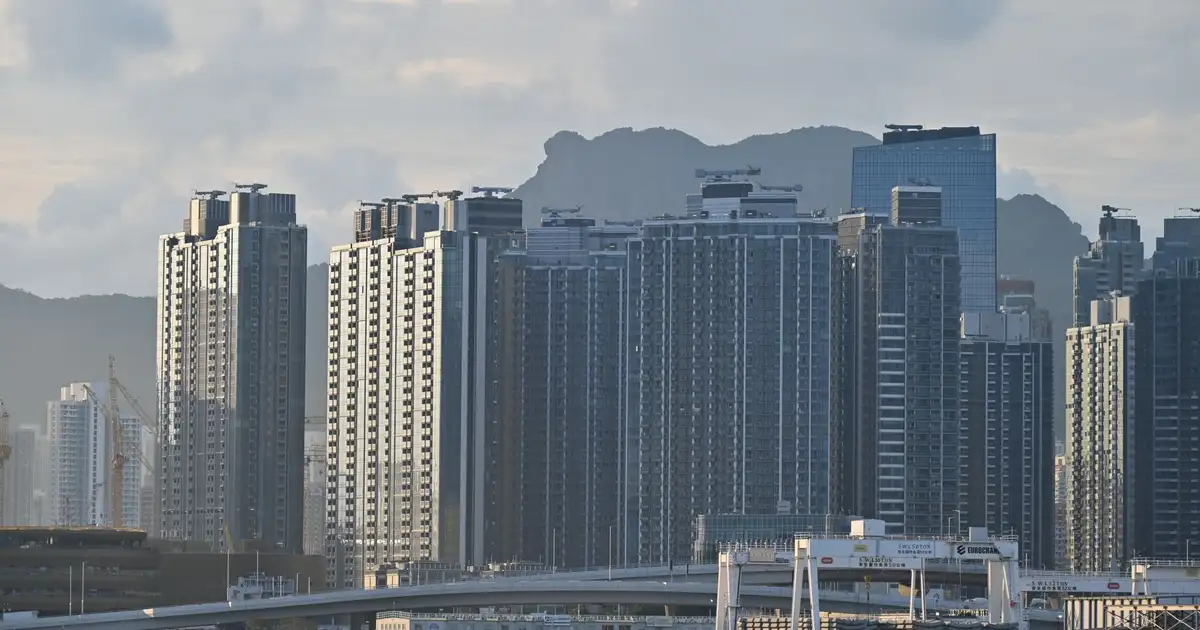
Hong Kong Property Steadies After Fed Hike, But Rate Trajectory Remains the Risk
Hong Kong's major banks held prime rates unchanged after the Fed's latest 25 basis-point hike, sparing the property market an immediate shock. But one-month Hibor is already edging toward 3%, sellers at the top end are withholding asking prices, and…
Banks Hold, Market Exhales
When HSBC and Hong Kong's other major banks declined to pass on the Fed's 25 basis-point rate increase last Wednesday, the local property market got a brief reprieve. But JLL Hong Kong chairman Joseph Tsang was direct about the limits of that relief: "The market outlook depends on whether US rate hikes will continue."
The reprieve is real but narrow. Tsang outlined the chain reaction a further Fed increase would set off: mortgage costs climb, homebuyer demand softens, developers face heavier financing burdens and accelerate sales to ease pressure, and appetite for land acquisition contracts. The structural question is not whether the market can absorb one held rate — it already has — but whether it can absorb a string of them.
Ground-Level Signals: Sellers Firming, Buyers Watching
The market's reaction to HSBC's announcement was immediate at the transaction level. In North Point, negotiating margins compressed from 3 to 4 percent down to 1 to 2 percent within hours of the announcement, and viewing appointments climbed 20 percent, according to Chris Wong, executive director at Century 21 Sunrise. One seller in the district raised the floor price on her 807-square-foot flat to HK$10.8 million (USD 1.38 million) from HK$10.67 million (USD 1.37 million), pointing to stable rates and promotional mortgage availability as her justification.
At City One Shatin, Midland Realty district associate director Now Wong observed owners holding firm on asking prices while remaining nominally open to negotiation — a posture that reflects confidence without commitment. At the primary market end, Chow Tai Fook's State Residence priced its first batch of flats more than 10 percent above the prices State Pavilia launched at in 2025, a direct test of whether developers can push pricing on the back of the rate pause.
Not everyone reading the signals is bullish. A property investor surnamed Lam reached out to an agent explicitly hunting distressed listings, prepared to move if further rate hikes generated forced sellers.
Hibor Is Already Moving
The prime rate headline obscures what is happening in the interbank market. One-month Hibor — the reference rate underlying most Hong Kong mortgages — had already approached 2.8 to 2.9 percent and could cross 3 percent in the near term, according to Raymond Chong, CEO of mortgage brokerage StarPro Agency. Banks do not need to move their prime rates to tighten effective mortgage costs; Hibor does the work independently.
Chong also flagged that a further Fed hike before year-end could push Hong Kong banks to raise prime rates by up to 25 basis points, and that rising funding costs would likely prompt lenders to pull fixed-rate mortgage products from the market by year's end — removing one of the mechanisms that has insulated buyers from floating-rate exposure.
Top-End Caution and the Colliers Baseline
At The Peak and in the Southern district, the pricing dynamic has shifted toward ambiguity. Most sellers with listings were inviting offers rather than setting prices, a wait-and-see posture that Centaline Property senior principal district sales director Joseph Yan attributed to rate uncertainty.
Colliers' Elliott Hau, head of financing valuation, argued that much of the rate pressure had already been absorbed — pointing to the drop in residential transactions from 7,650 in June to 4,019 in August as evidence that buyers had priced in the expectation of higher borrowing costs. Colliers is holding its full-year forecast for residential price growth of 8 to 10 percent. The caveat is blunt: if elevated borrowing costs persist, "some capital could be diverted to alternative investment products offering competitive returns," Hau said.
Commercial property carries a starker exposure. JLL's Tsang warned that continued rate increases would pressure yields across the commercial segment, with buyers demanding higher rental returns and owners potentially forced to cut asking prices to execute sales.
Found this useful? Share it!
Interested in Finance Education?
Explore our CFA and investing courses — built for serious learners.